
Best Manga Bookshelf: Size, Load & Shelf Planner (2026)
A source-backed manga bookshelf worksheet that checks clear dimensions, planned book weight, anchoring, preservation, and room fit before purchase.
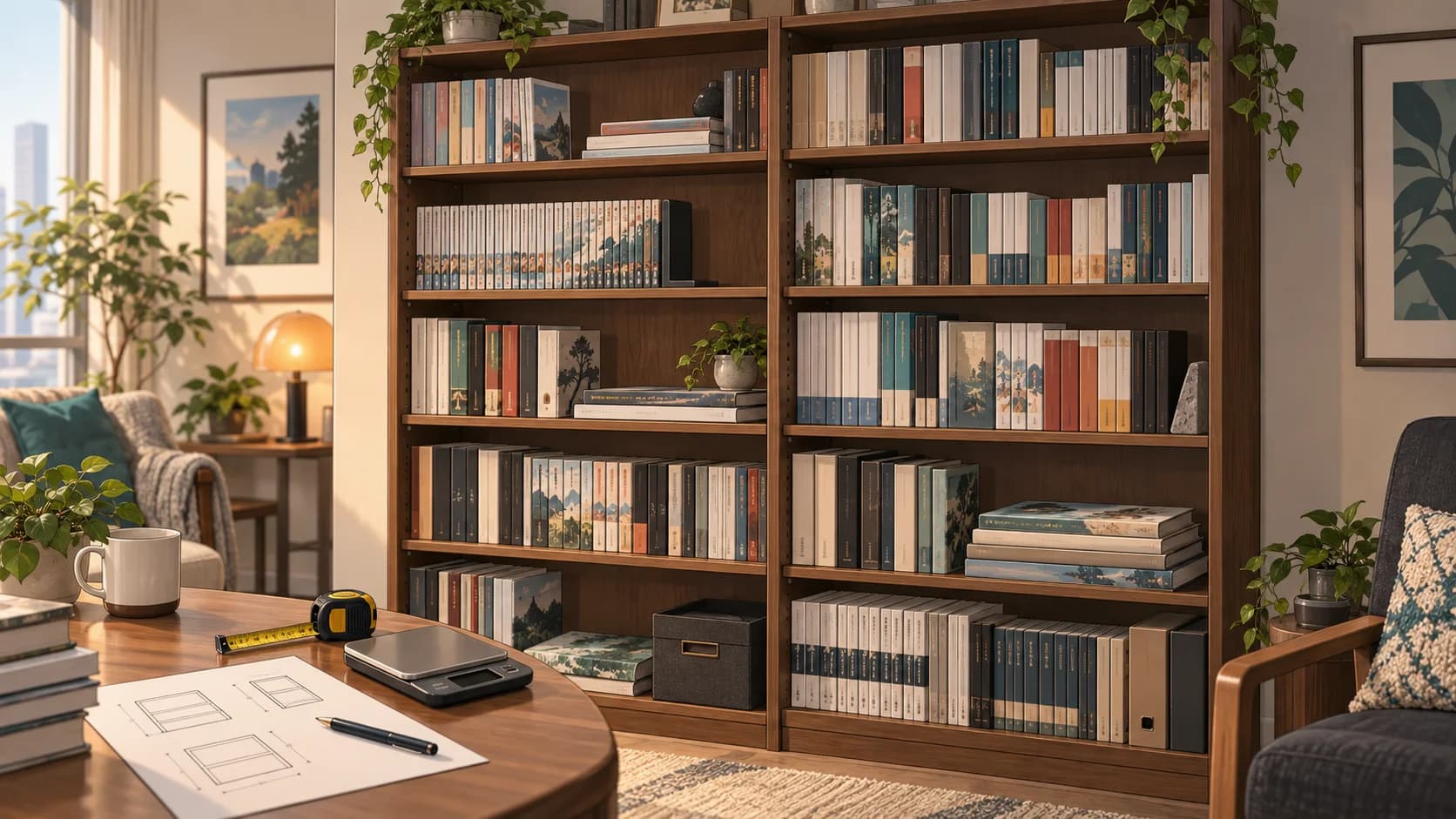
The best manga bookshelf is the one that passes five checks for your actual collection: clear shelf width, usable height, depth, the manufacturer's per-shelf load rating, and safe anchoring. Measure those before comparing finishes or counting shelves. Standard paperbacks, hardcover deluxe editions, box sets, and figures create different constraints, so a popular bookcase is only a candidate until your measurements prove the fit.
For a current reference point, the IKEA BILLY bookcase is 31.5 inches wide, 11 inches deep, and 79.5 inches tall. IKEA lists a 66-pound maximum load per shelf, four adjustable shelves, one stationary shelf, and a requirement to anchor the unit securely. A narrower Target Room Essentials bookcase is 24.49 inches wide and 11.57 inches deep, with 23.2 inches of clear width, 11.4-inch shelf depth, and a 30-pound maximum per shelf. Those facts show why exterior size alone cannot choose a winner.
This guide provides a shelf-fit worksheet rather than pretending one product is universally best. It was checked in September 2026 against current retailer specifications and book-care guidance. Product models, ratings, inventory, prices, and return terms can change, so reopen the manufacturer or retailer page before buying.
Collectors planning the whole room should pair this worksheet with the anime room decor plan. If the immediate purchase is a large collected edition, check the manga box-set comparison before committing shelf space.
Manga bookshelf quick-fit worksheet
Fill this in for the books you plan to place together. Use the interior space between side panels and shelves. Do not copy an exterior product width into the clear-width field.
Scroll horizontally to see all columns
| Check | Measure or verify | Reject a shelf when |
|---|---|---|
| Deepest book | Cover edge to spine on the deepest owned edition | The book overhangs the usable shelf surface |
| Tallest book | Bottom edge to top edge, including slipcases | The fixed or adjustable opening cannot clear it |
| Planned row width | Combined spine width of the actual books in one row | The row needs compression, leaning, or hidden overflow |
| Planned row weight | Weight of the actual books assigned to one shelf | It exceeds the manufacturer's per-shelf rating |
| Clear shelf width | Interior span available to the books | Only the exterior bookcase width is published or measured |
| Shelf depth | Usable front-to-back surface | The layout depends on unsupported overhang |
| Anchoring | Product instructions plus wall-appropriate hardware | The unit cannot be secured as the maker requires |
| Room conditions | Light, temperature, humidity, vents, and leak risk | The location exposes books to direct light, heat, damp, or water |
The binding constraint is the first limit you reach. A wide shelf can still fail on weight. A strong shelf can still fail on depth. An adjustable bookcase can still have one stationary section that prevents the arrangement you expected.
Keep the completed worksheet on your phone while shopping. It turns a broad search result into a short specification test and makes retailer comparison much faster on mobile.
How to measure manga shelf capacity without guessing
Start with the books, not the furniture listing. Group the editions that will share a shelf, then measure the deepest and tallest item in that group. Measure the combined spine width of the planned row or measure a representative group and verify outliers separately. Hardcover deluxe editions, omnibuses, slipcases, and art books should not inherit the dimensions or weight of a standard paperback.
Use this width formula:
Width capacity = floor(clear shelf width ÷ measured average spine width)
Treat the result as a width ceiling, not a promise. Check the actual row because spine thickness varies, and leave enough working space to remove a volume without pulling neighboring books by their headcaps. If a series includes a much thicker edition, calculate around the real book rather than smoothing it into an average.
Weight needs a second test. Weigh the actual planned row, including slipcases and bookends, and compare that total with the product's stated per-shelf load. The lower of the width fit and the weight fit controls the arrangement. A retailer photograph of a full shelf is not a load specification.
Here is a grounded fit example. VIZ lists one paperback manga edition at 5 by 7.5 inches. Its 5-inch depth fits within the Target shelf's published 11.4-inch depth. That comparison establishes depth fit for that one edition. It does not establish how many volumes fit across the row because spine widths are still missing, and the actual stack must remain within the 30-pound shelf rating.
This distinction prevents a common error: turning one representative trim size into a universal manga size. Publishers, imprints, formats, and special editions vary. Measure the collection you own and any specific edition you intend to buy.
Two current bookcases compared by useful constraints
These representative examples compare published specifications and do not rank long-term durability. They demonstrate how to compare a wider adjustable bookcase with a narrower alternative using facts the retailer publishes.
Scroll horizontally to see all columns
| Specification | IKEA BILLY | Target Room Essentials | Why it matters |
|---|---|---|---|
| Exterior width | 31.5 inches | 24.49 inches | Determines room footprint, not usable row capacity |
| Exterior depth | 11 inches | 11.57 inches | Helps screen room fit; use shelf depth for the books |
| Exterior height | 79.5 inches | 71.18 inches | Affects wall clearance and the anchoring setup |
| Published clear width | Not stated on the retrieved page | 23.2 inches | Clear width belongs in the capacity formula |
| Published shelf depth | Product depth is stated; clear shelf depth is not separated | 11.4 inches | Compare with the deepest owned edition |
| Maximum load per shelf | 66 pounds | 30 pounds | Compare with the actual planned row weight |
| Shelf arrangement | Four adjustable, one stationary | Five adjustable open shelves | Determines whether oversize editions can get enough height |
| Safety instruction | Securely anchor with suitable screws and plugs | Anti-tip anchoring hardware included | Follow the exact product instructions and wall requirements |
The BILLY has the stronger published per-shelf load in this pair and a wider exterior footprint. The Target model publishes useful clear-width and shelf-depth values but a lower load. Neither row proves long-term resistance to sag, assembly quality, floor stability, or fit for your wall. The product instructions and your measurements remain decisive.
If a listing omits clear width, contact the seller, inspect the assembled display, or measure the exact model before purchase. Do not estimate clear width by subtracting arbitrary panel thickness from exterior width. If a marketplace listing omits a per-shelf rating, treat that as missing evidence rather than assuming that “bookcase” means suitable for a dense manga row.
Choose the shelf type for the collection you own
A conventional adjustable bookcase suits collectors mixing standard volumes with taller omnibuses or hardcovers. Adjustable openings reduce wasted vertical space. Check which shelf is stationary because that section may constrain the layout.
A media shelf can use shallow depth efficiently for standard paperbacks. Its narrower shelves may reduce the span that can bend under load, but that is only a design clue. The manufacturer's rating still controls, and tall or deep editions may not fit.
A cube organizer separates a collection into shorter spans and can mix books with display objects. Cubes often waste horizontal or vertical space for one continuous series, and their fixed openings can reject oversize editions. Measure the clear cube opening rather than the overall unit.
A metal utility shelf may publish a high load rating and suit very heavy collections. Wire surfaces, industrial depth, large footprints, and visual style may make it a poor living-room fit. The Library of Congress storage guidance favors a completely flat, solid shelf surface without protrusions, so a wire shelf needs an appropriate solid, stable surface if books would otherwise rest directly on the grid.
A glass-door bookcase reduces routine dust access but adds door clearance, reflections, ventilation considerations, and another set of dimensions. A door does not protect books from direct sunlight, heat, high humidity, or leaks.
Collectors sharing shelves with statues should use the anime figure collecting guide for dust, clearance, authenticity, and display planning. The best anime figures guide handles figure-line selection; this page keeps the dense book load as the primary job.
Prevent sag, tipping, and damaged books
Shelf sag is not solved by a brand name. Span, shelf material, thickness, attachment, assembly, humidity, time, and load distribution all affect deflection. Without physical testing, the defensible rule is simple: stay within the exact model's published load, distribute the books as the instructions require, and stop using a shelf that is bending, damaged, loose, or unstable.
Anchoring is a separate requirement. IKEA says the cited BILLY must be securely anchored with screws and plugs suitable for the home. Target lists anti-tip anchoring hardware with its cited model. Follow the product instructions and use hardware appropriate to the wall. A heavy lower row may improve the center of gravity, but it does not replace required anchoring.
Book condition matters too. The Library of Congress advises keeping most books upright without leaning, grouping similar sizes so neighboring covers support each other, and using bookends when needed. Large books that are too big to stand upright should lie flat with full support. Avoid placing a volume spine-up because gravity can stress the text block.
The same guidance recommends a cool environment at 70 degrees Fahrenheit or below and relative humidity from 30% to 55% for most books. Avoid direct or intense light, radiators, vents, damp basements, hot attics, garages, leaks, and rapid environmental swings. Dust shelves regularly because dust can discolor materials, attract pests, and absorb moisture.
These are collection-care boundaries, not a demand for museum conditions. Choose the safest practical location in the room and avoid obvious sources of heat, water, and sunlight.
Plan for growth without hiding half the collection
Buying exactly enough shelf space for today's row makes the next purchase an overflow problem. Record the series you actively collect, the editions already announced or preordered, and the physical space that can accept another unit. Leave growth space where it is useful instead of scattering empty gaps across every shelf.
Double stacking can increase raw capacity on a deep shelf, but it hides books, complicates retrieval, and adds weight. Run the load check on both rows together. A rear riser can improve visibility, yet it also adds weight and changes vertical clearance. Do not use a capacity trick before checking the full arrangement against the shelf rating.
Box sets need their own decision. Some collectors shelve the individual volumes; others keep the outer case intact. The best manga box sets guide records current series coverage and encourages buyers to verify exact edition dimensions. Bring those measurements back to this worksheet.
If the room cannot safely take another unit, a digital library can solve the space constraint. The best e-reader for manga comparison separates store purchases, apps, and local file formats so the digital option does not create a different compatibility problem. Readers still choosing what deserves physical space can use the best manga guide by reader type.
Where to compare manga bookshelf listings
Open the official specification page for any known model first. Then verify that the retailer listing matches the exact model, dimensions, shelf arrangement, load rating, anchoring requirements, seller, materials, stock, price, and return policy.
The search link is intentionally broad because marketplace products and sellers change. It is a place to apply the checklist, not evidence that every result is suitable. Skip a listing that hides the measurements or load information required for your collection.
Browse more anime merchandise and collector guides when the next decision concerns the room, figures, gifts, or physical editions.
After the shelf worksheet establishes which physical editions fit, use the edition-first manga buying checklist to confirm the ISBN and compare the seller, delivered cost, stock state, cancellation terms, returns, and damage process.
For display items that will share the shelf with manga, the anime merch seller verification guide helps trace a listing back to a manufacturer or rights-holder record and check condition, delivery, returns, and recourse before purchase.
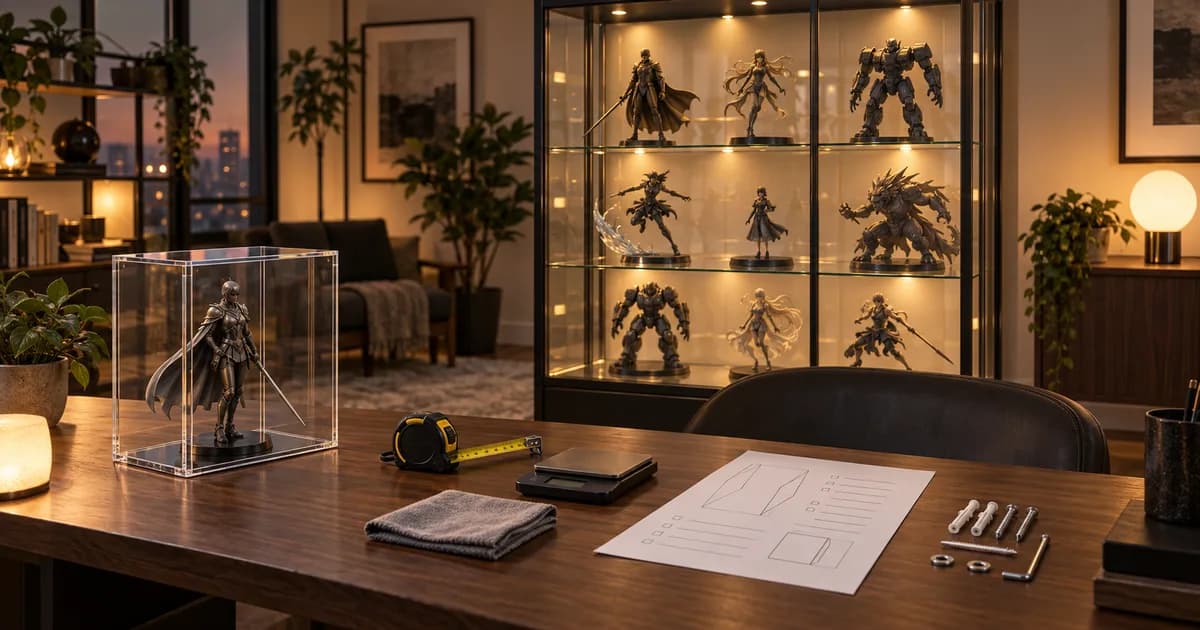
If figures will share the room or furniture, keep the two load problems separate: this planner handles books, while the figure display case worksheet checks posed clearance, base depth, shelf rating, access, anchoring, lighting, material care, and growth.
When part of the collection needs enclosed or off-shelf storage, use the manga storage box size and care guide to measure the exact editions, compare usable interior dimensions, support partial rows, label containers, and choose a dry, inspectable location.
Frequently Asked Questions
What bookshelf is best for manga?
The best bookshelf passes your actual clear-width, depth, height, weight, anchoring, and room-condition checks. The cited IKEA BILLY is a useful wider reference with a 66-pound maximum per shelf, while the cited Target model is narrower and lists a 30-pound maximum. Neither is a universal winner without your collection measurements.
How deep should a manga bookshelf be?
It should fully support the deepest edition you plan to place on that shelf without unsafe overhang. One cited VIZ paperback is 5 inches deep, but manga formats vary. Measure standard volumes, hardcovers, omnibuses, slipcases, and box sets separately, then compare the deepest result with the shelf's usable depth.
How many manga volumes fit on one shelf?
Calculate width capacity by dividing clear shelf width by measured average spine width and rounding down. Then weigh the planned row and compare it with the manufacturer's per-shelf load. Use whichever limit you reach first. Avoid a universal volume count because editions and shelf interiors vary.
Is the IKEA BILLY good for manga?
It can be a strong candidate when its dimensions suit the room and collection. IKEA lists the cited unit at 31.5 inches wide, 11 inches deep, and 79.5 inches tall, with a 66-pound maximum per shelf. Verify the exact model, measure its clear interior for your books, and follow IKEA's anchoring requirement.
Should manga be stored upright or flat?
The Library of Congress recommends keeping most books upright without leaning and supporting them with similar-size neighbors or bookends. Large books that are too big to stand upright can be stored flat and fully supported. Do not let a large volume overhang the shelf.
Can I double stack manga?
Only after checking the combined weight, shelf depth, vertical clearance, stability, visibility, and access. Double stacking can use otherwise empty depth, but it hides the rear row and may reach the load limit faster. Include risers and bookends in the planned load.
How do I protect manga from yellowing and damage?
Minimize direct or intense light, avoid heat and damp locations, keep the space reasonably cool and stable, dust regularly, and support books without leaning. The Library of Congress gives a practical target of 70 degrees Fahrenheit or below and 30% to 55% relative humidity for most books.

Written by WeebRai
Founder · Editor · Chief OtakuOne fan, 12+ years deep, 1,200+ series in. Every review, recap and ranking on PrimeTime Anime is written by WeebRai — checked against the actual episodes and manga, never recycled from press releases.