
One Piece Characters Explained: Straw Hats, Roles and Arcs
A source-checked map of the ten Straw Hat Pirates, what each contributes to the crew, and the arcs that best explain their character development.
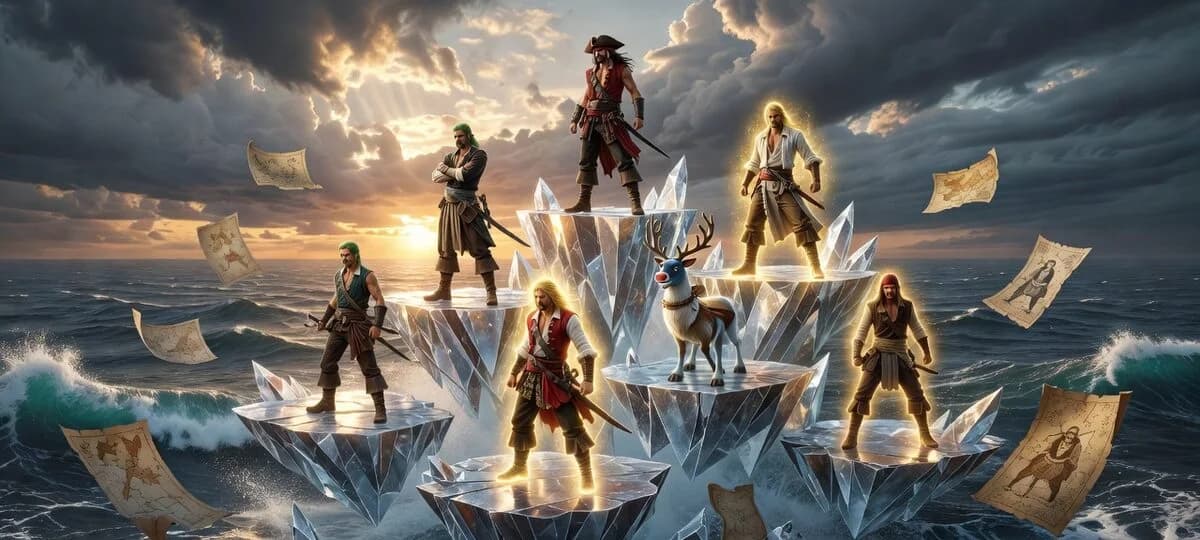
The Straw Hat Pirates have ten members: Monkey D. Luffy, Roronoa Zoro, Nami, Usopp, Sanji, Tony Tony Chopper, Nico Robin, Franky, Brook, and Jinbe. Each has a practical job aboard the ship, a personal dream, and a defining conflict that explains why they chose Luffy. That combination matters more to One Piece than a simple strongest-to-weakest list.
This guide maps those roles and character arcs. It is safe for viewers through Wano and avoids unresolved Final Saga outcomes. If you want combat tiers, use our separate One Piece power ranking; this page focuses on who the characters are and what they mean to the story.
Straw Hat Pirates at a glance
The official anniversary roster names the same ten crewmates used in the table below. “Narrative function” is our analysis: it describes the kind of pressure each character brings to a scene, not an official job title.
Scroll horizontally to see all columns
| Character | Ship role | Personal dream | Defining arc | Narrative function |
|---|---|---|---|---|
| Monkey D. Luffy | Captain | Become Pirate King | Marineford | Turns freedom into a choice other people can act on |
| Roronoa Zoro | Combatant and swordsman | Become the world’s greatest swordsman | Thriller Bark | Gives the crew discipline, resolve, and a standard for loyalty |
| Nami | Navigator | Draw a map of the world | Arlong Park | Converts danger into a route forward and trust into action |
| Usopp | Sniper | Become a brave warrior of the sea | Water Seven and Enies Lobby | Makes courage visible because he acts while afraid |
| Sanji | Cook | Find the All Blue | Whole Cake Island | Tests whether care can survive shame, duty, and self-sacrifice |
| Tony Tony Chopper | Doctor | Become a doctor who can cure any disease | Drum Island | Connects medical skill with radical acceptance |
| Nico Robin | Archaeologist | Discover the true history | Enies Lobby | Links the crew’s voyage to erased history and the right to exist |
| Franky | Shipwright | Sail his dream ship around the world | Water Seven | Turns invention into responsibility for what a creator leaves behind |
| Brook | Musician | Reunite with Laboon | Thriller Bark | Holds memory, grief, and promises across long separations |
| Jinbe | Helmsman | Not formally stated; our reading is coexistence between humans and fish-men | Fish-Man Island | Brings political memory, restraint, and adult judgment to the crew |
The table also explains why “Who is the main character?” has two answers. Luffy is the protagonist and captain, but One Piece distributes essential story work across the crew. Nami makes the voyage navigable. Robin makes its history readable. Franky keeps its ship viable. Chopper keeps its people alive. The adventure fails if those roles are reduced to combat strength.
Monkey D. Luffy: freedom as leadership
Luffy’s official profile identifies him as the captain and states his goal plainly: become Pirate King. What makes him unusual is that he rarely manages people through detailed plans. He recognizes the desire another character is afraid to say aloud, then creates room for that person to choose.
That pattern begins when he recruits Zoro and becomes clearer with Nami, Robin, and Sanji. Luffy does not erase their history. He refuses to let an oppressor, institution, or inherited duty decide their future. His leadership therefore works through commitment: once he accepts someone’s choice, he treats it as real even when the cost becomes enormous.
Marineford is his defining failure because determination alone cannot solve every problem. The aftermath forces him to acknowledge the gap between wanting to protect people and having the capacity to do it. His later growth has emotional weight because it answers that failure rather than replacing his personality.
Zoro, Nami, and Usopp: resolve, direction, and fear
Roronoa Zoro
The official Zoro profile calls him the crew’s first companion, describes his promise to become the world’s greatest swordsman, and emphasizes his role as a supporting pillar. Zoro gives Luffy’s open-ended freedom a hard edge: a crew also needs standards, consequences, and the willingness to carry pain without making it everyone else’s burden.
Thriller Bark expresses that function most clearly. The scene works because Zoro’s sacrifice is private. He is not bargaining for status or praise. His dream remains personal, but loyalty has changed what achieving it means. He must become great without treating his companions as expendable steps on the way there.
Nami
Nami is the navigator and the person most able to turn an impossible destination into practical decisions. Her official character profile connects her talent for weather and navigation to her dream of drawing a world map. Arlong Park supplies the emotional key: control of maps once represented captivity, while navigation with the Straw Hats becomes chosen work.
Her skepticism also improves the crew. Luffy can commit before understanding the logistics; Nami sees the storm, money, supplies, and survival problem that commitment creates. Their contrast is productive. He protects the freedom to travel, and she makes the travel possible.
Usopp
Usopp is often misread when bravery is treated as the absence of fear. His defining trait is that fear remains visible. He imagines disaster, wants to escape it, and sometimes fails before choosing to return. The choice carries meaning because the story never pretends it is effortless.
Water Seven makes his insecurity collide with the crew’s changing needs. His argument over the Going Merry is also an argument about replaceability: if a beloved ship can no longer continue, he fears a weaker crewmate might receive the same judgment. Enies Lobby does not erase that wound. It gives him a way to act for Robin and eventually accept responsibility for coming back.
Sanji and Chopper: care without self-erasure
Sanji
Sanji’s ship role is cook, but food in One Piece is rarely decoration. Feeding someone recognizes that their life has value before deciding whether they deserve help. That principle explains why his kindness can appear irrational in a conflict and why Luffy values it.
Whole Cake Island then exposes the flaw inside Sanji’s care: he can decide that everyone else deserves rescue while treating his own life as a fair price. His family history, debt to Zeff, and instinct to protect the crew trap him in a private calculation. The arc’s character work comes from forcing him to ask for the same care he gives other people.
Tony Tony Chopper
Chopper joins as the doctor after Drum Island teaches him two linked lessons. Medicine requires knowledge, and healing also requires a community willing to see a person rather than a category. Rejected as a reindeer and feared as something in between species, he responds by pursuing a dream broad enough to include anyone.
His role keeps the story honest about the cost of adventure. Battles leave injuries; climates and unfamiliar islands create illnesses; courage does not replace treatment. Chopper’s compassion is strongest when paired with clinical judgment, because wanting to save someone and knowing how to help are different responsibilities.
Robin and Franky: history, creation, and responsibility
Nico Robin
Robin is the archaeologist who can connect scattered records to the suppressed history behind the voyage. Her official profile describes a survivor who learned not to trust others and gradually opened herself to the crew. The official Enies Lobby summary records the confrontation that turns this slow change into a direct choice.
Her defining arc is powerful because rescue alone is not enough. Robin must believe that wanting to live is a request she is allowed to make. Once she does, archaeology stops being a solitary pursuit conducted while waiting for betrayal. Her scholarship becomes something a community protects, and the crew’s adventure gains historical stakes beyond treasure hunting.
Franky
Franky appears first as an antagonist in Water Seven, where ships carry both physical and emotional history. His work as shipwright is inseparable from the consequences of making things: a creator cannot fully control how an invention is used, but can still choose what responsibility to take for it.
The Thousand Sunny gives that idea a positive form. Franky builds for a shared voyage and then joins it, placing his own life alongside the people who depend on his work. His loud self-presentation can obscure a careful emotional intelligence. He understands what the loss of a ship means because his own past taught him that machines can hold dreams, guilt, and inheritance at once.
Brook and Jinbe: promises that outlive a single crisis
Brook
Brook’s promise to Laboon makes him a character about continuity. His humor, music, and theatrical manners sit beside a history of isolation and loss. The contrast does not trivialize grief; it shows how a person can carry grief without letting it become the only remaining identity.
As musician, Brook gives the crew a practice that is useful without being instrumental. Songs mark departures, reunions, celebrations, and remembrance. That matters in a story where islands and companions separate repeatedly. His dream is not to conquer an opponent but to complete a promise across distance.
Jinbe
The official Jinbe profile identifies him as helmsman and traces his history through the Sun Pirates, the Seven Warlords, and his commitment to the Straw Hats. He joins with experience inside institutions that younger characters mostly encounter from the outside.
Jinbe’s judgment gives the crew a longer political memory. He understands that loyalty, liberation, and repayment can pull in different directions. Fish-Man Island shows why personal decency cannot by itself repair inherited hatred, while his choices show that history does not remove individual responsibility. At the helm, that same steadiness becomes literal: power still needs direction.
The major One Piece factions around the crew
The wider cast becomes easier to remember when characters are grouped by the kind of relationship they have with the Straw Hats.
Scroll horizontally to see all columns
| Group | Representative characters | What the group adds to the story |
|---|---|---|
| Pirate rivals | Shanks, Blackbeard, Law, Kid, Buggy | Competing definitions of ambition, freedom, and reputation |
| Marines | Garp, Koby, Smoker, Sakazuki | The conflict between personal justice and institutional orders |
| World Government | Imu, the Five Elders, Cipher Pol | Secrecy, inherited authority, and control of historical knowledge |
| Revolutionary Army | Dragon, Sabo, Ivankov | Organized resistance aimed at the structure of power |
| Kingdom allies | Vivi, Momonosuke, Shirahoshi, Rebecca | The local human cost of large political conflicts |
| Mentors and legacies | Roger, Rayleigh, Whitebeard, Oden | Dreams and promises passed to people who interpret them differently |
This faction view prevents a common reading mistake: a character can be important without joining the crew or winning a major fight. Vivi changes how the Straw Hats understand responsibility to a country. Koby develops a form of courage inside the Marines. Law’s alliance tests whether cooperation can remain meaningful when ambitions differ. Their narrative value comes from the decision they force, the history they reveal, or the alternative they present.
Which One Piece arc best explains each character?
If you want a focused character rewatch, use the defining-arc column as a route rather than starting with isolated “best moments.” Arlong Park explains why Nami’s ordinary work aboard the ship is an expression of freedom. Drum Island establishes why Chopper’s medical ambition and need for belonging cannot be separated. Water Seven and Enies Lobby form one continuous test for Usopp, Robin, and Franky. Whole Cake Island reframes Sanji’s generosity by asking whether he can accept help.
Viewers returning after a break can use the One Piece filler list helps distinguish anime-original detours from the central character arcs. For access options, use the maintained legal One Piece streaming guide, then compare broader catalogs in our anime streaming service guide.
Character guide methodology and spoiler policy
This page was checked on September 15, 2026. Crew membership and stated roles come from official ONE PIECE.com profiles and the franchise’s official roster. The VIZ chapter index is the English publication checkpoint. The descriptions of narrative function are editorial analysis grounded in completed arcs.
We deliberately exclude speculative identities, unrevealed abilities, and predictions about who survives the Final Saga. We also keep strength comparisons out of this guide because those claims need a different method. Readers seeking that question can use the dedicated power ranking and browse the broader anime rankings hub.
For source-material discovery, our best manga picks by reader type explains when reading adds context beyond an adaptation.
A One Piece shelf can follow a crew, faction, rivalry, or character era, while the figure format determines how that idea appears in physical space. The anime figure line comparison explains when Portrait.Of.Pirates, World Collectable Figure, Figuarts ZERO, or an articulated line best fits that collection plan.
For more source-led character and franchise explainers, browse the anime guides archive.
Frequently asked questions
Who are the ten Straw Hat Pirates?
The crew consists of Luffy, Zoro, Nami, Usopp, Sanji, Chopper, Robin, Franky, Brook, and Jinbe. Luffy is captain; the other members contribute swordsmanship, navigation, marksmanship, cooking, medicine, archaeology, shipbuilding, music, and helmsmanship.
Who is the main character in One Piece?
Monkey D. Luffy is the protagonist and captain. The story still depends on an ensemble structure: other Straw Hats own essential skills, histories, and decisions that Luffy cannot substitute for.
Is this a spoiler-free One Piece character guide?
It discusses completed character arcs through Wano, including Enies Lobby, Marineford, and Whole Cake Island. It avoids unresolved Final Saga outcomes and does not reveal current manga twists.
Where can I find One Piece character power rankings?
Use the site’s dedicated One Piece power ranking. It owns combat-comparison intent, while this guide explains roles, motivations, relationships, and development.
What is the best way to remember the large One Piece cast?
Start with the Straw Hats’ ship roles and dreams, then group supporting characters by faction: pirate rivals, Marines, the World Government, revolutionaries, kingdom allies, and legacy figures. This connects each name to a stable story function.
More anime guides
Viewers following the story in English can check the One Piece English dub schedule for the current dubbed endpoint, episode 1156's Elbaph premiere and the announced weekly release time.
Published by WeebRai
Owner and editorWeebRai is the online name of Rai, who owns and runs PrimeTime Anime. He chooses what gets published and fixes errors when readers report them. Many guides here were drafted with AI writing tools from the sources linked on the page; facts come from those sources, not from claims of hands-on testing.
Share this article
Test your fandom
Which One Piece Straw Hat Pirate Are You?
Find out which Straw Hat Pirate from One Piece you are most like by answering these personality questions.
Take the quiz
One Piece Grand Line Knowledge Test
Test your advanced knowledge of the One Piece world with these challenging trivia questions.
Take the quiz
Anime Series Trivia Quiz
Test your knowledge of popular anime series and their main characters.
Take the quiz