
Solo Leveling Crunchyroll Dominance: How It Became Most Watched Anime 2026
Discover how Solo Leveling shattered Crunchyroll records to become the most-watched anime of 2026, surpassing giants like One Piece and Demon Slayer.
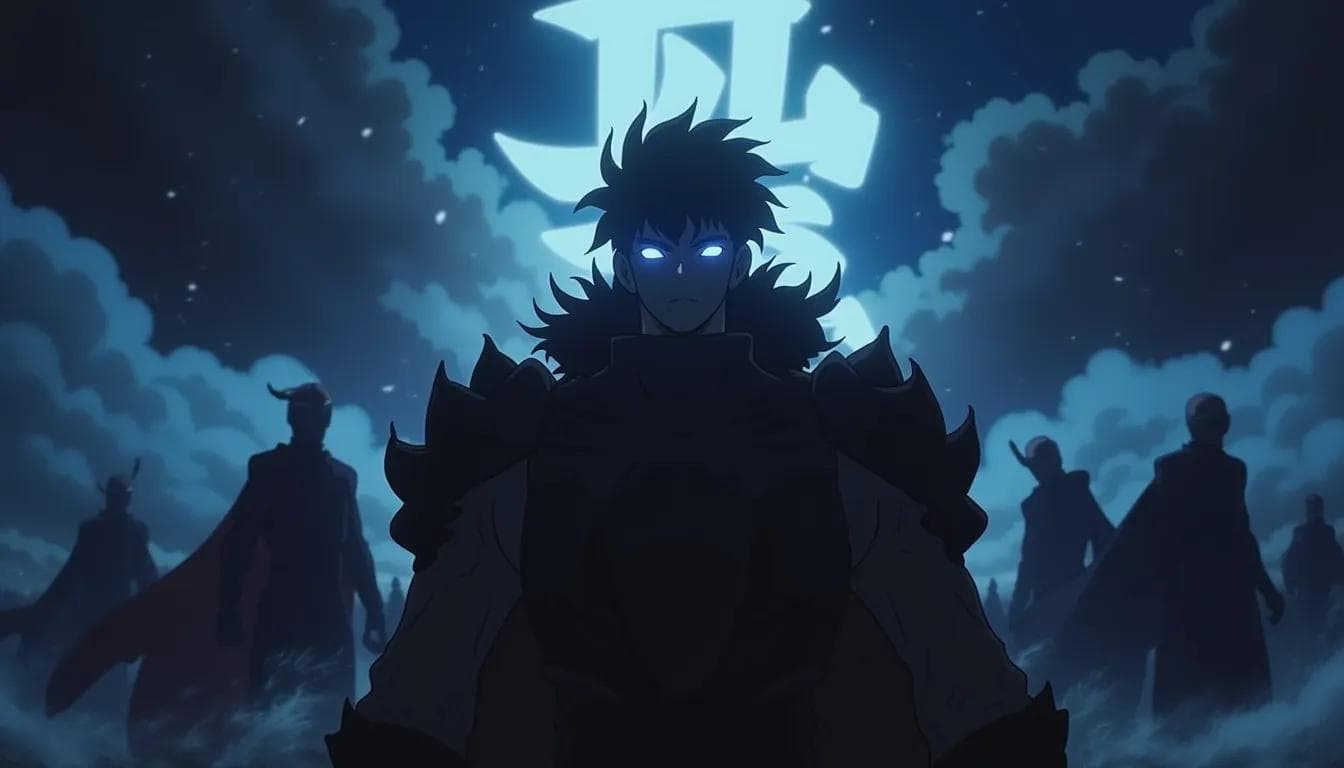
Solo Leveling's Meteoric Rise on Crunchyroll
In the crowded battlefield of anime streaming, one series has done what many thought impossible — it dethroned titans like One Piece, Demon Slayer, and Jujutsu Kaisen to claim the crown as Crunchyroll's most-watched anime in 2026. That series is Solo Leveling. What started as a wildly popular Korean manhwa by Chugong has become a cultural phenomenon that transcends the medium, pulling in millions of viewers who had never touched a webtoon in their lives and converting them into die-hard fans of Sung Jin-Woo's relentless ascent from the weakest hunter to an unstoppable force.
But Solo Leveling's dominance is not an accident. It is the result of a perfect storm — an extraordinary adaptation by A-1 Pictures, a shrewd distribution strategy by Crunchyroll, and a protagonist whose power fantasy resonates with a global audience hungry for exactly this kind of story. Let us break down every dimension of this phenomenon.
The Numbers Behind the Dominance
Sony's 2026 Business Segment Presentation confirmed what the anime community had already suspected: Solo Leveling is the highest-performing anime in Crunchyroll's history by viewership. The series reached its absolute peak engagement shortly after the Season 2 finale aired on March 30, 2026, with the platform reporting record concurrent viewers during the final episode's simulcast window.
The raw statistics paint a staggering picture. Solo Leveling holds a 4.9-star average from over 610,000 user reviews on Crunchyroll — a number no other anime on the platform has come close to matching. Season 2 alone drove a reported 30% spike in Crunchyroll premium subscriptions during its run, with the series consistently trending as the number one title in every major market including North America, Europe, Southeast Asia, and Latin America. The finale episode generated more social media impressions in 24 hours than any previous anime episode in Crunchyroll history, eclipsing even the massive engagement spikes from Demon Slayer's Mugen Train arc.
The ripple effects extend beyond streaming. The original manhwa saw a significant surge in digital sales following Season 2's premiere, with publishers reporting renewed interest in the completed webtoon. The light novel source material also climbed bestseller charts in markets where it had previously been a niche product. This cross-media amplification is the mark of a true cultural touchstone — Solo Leveling is not just an anime hit, it is a franchise juggernaut.
Why Solo Leveling Dominates: The Power Fantasy Perfected
To understand Solo Leveling's appeal, you need to understand what it does better than almost any other series in the medium: it delivers the purest, most satisfying power fantasy in modern anime. If you have ever explored anime genres and what makes them tick, you know that the power fantasy subgenre lives or dies on one thing — the feeling of unstoppable progression. Solo Leveling does not just nail this; it perfects it.
Sung Jin-Woo begins the story as the weakest E-rank hunter in a world where dimensional gates unleash deadly monsters. He is mocked, pitied, and nearly killed on every mission. But after a near-death experience in a double dungeon, he gains access to a mysterious System — a video-game-like interface that allows him to level up without limits. From that moment, the trajectory is always upward. Every fight is a step on the ladder. Every obstacle is a chance to grow stronger.
What separates Jin-Woo from other overpowered protagonists is his origin. He earned his power through suffering. Unlike characters who start strong or receive their abilities through divine inheritance, Jin-Woo clawed his way from absolute zero. This creates a deep emotional investment — viewers do not just admire his strength, they feel he deserves it. The progression system, borrowed from RPG and gacha game mechanics, taps into the same dopamine loops that make those games addictive. Watching Jin-Woo gain new skills, summon shadow soldiers, and systematically dismantle enemies who once terrified him is viscerally satisfying in a way that few anime achieve.
Then there is the shadow army. Jin-Woo's ability to extract shadows from defeated enemies and add them to his ever-growing army is one of the most visually spectacular and narratively compelling power sets in anime. Each new shadow soldier carries the weight of a battle won, a challenge overcome. When Jin-Woo unleashes the full army, it is not just a display of power — it is a visual summary of his entire journey. A-1 Pictures understood this instinctively and poured extraordinary resources into these sequences, making them the moments that break the internet every single week.
For a deeper look at where Jin-Woo stacks up against other overpowered protagonists, check out the Ultimate Anime Power Rankings 2026 Tier List — the debates are fierce, but his placement speaks for itself.
A-1 Pictures and the Animation Quality That Changed Everything
Let us be direct: the anime adaptation of Solo Leveling could have been mediocre and still drawn a large audience based on the manhwa's existing fanbase alone. But A-1 Pictures (Aniplex) did not settle for mediocre. They delivered one of the most visually ambitious anime productions of the decade, and that quality gap between expectation and reality is a massive part of why the series exploded beyond its core fanbase.
Season 1 set the standard with its dark, atmospheric tone and fluid combat choreography. The double dungeon arc, Jin-Woo's awakening sequence, and the Jeju Island foreshadowing all demonstrated a studio operating at peak capability. But Season 2 raised the bar to an almost absurd degree. The Jeju Island raid arc, which serves as the climactic centerpiece of the second season, featured some of the most technically impressive animation sequences in recent anime history. The fight between the S-rank hunters and Ant King Beru was a masterclass in weight, impact, and visual storytelling — every hit landed with bone-rattling force, every movement was choreographed with cinematic precision.
The character animation deserves particular praise. Jin-Woo's visual evolution across two seasons mirrors his narrative arc. Early episodes depict him as gaunt, hesitant, and physically unremarkable. By Season 2's finale, his presence fills every frame — broader shoulders, sharper eyes, an aura of menace that the animation team conveys through subtle changes in lighting, shadow work, and body language. It is the kind of visual storytelling that elevates source material rather than simply translating it.
A-1 Pictures also made brilliant use of color theory throughout the series. The shadow extraction sequences use deep indigos and electric purples that contrast sharply with the warm tones of the human world, creating an immediately recognizable visual identity. When Jin-Woo activates his powers, the screen shifts into a cooler palette that signals danger and otherworldly authority. These are not flashy gimmicks — they are deliberate artistic choices that give Solo Leveling a look and feel unlike anything else in the current anime landscape.
The soundtrack, composed by Hiroyuki Sawano (Attack on Titan, Kill la Kill), amplifies everything. Sawano's signature style — soaring orchestral arrangements punctuated by electronic drops and intense vocal performances — matches Solo Leveling's tone of epic escalation perfectly. The Season 2 opening theme became an anthem, trending globally on music platforms within hours of release.
Manhwa to Anime: What the Adaptation Got Right (and What Changed)
Adapting a manhwa to anime is a different challenge than adapting a manga. Manhwa are read vertically in a scrolling format, with panels designed for that specific reading experience. The dramatic reveals, which in the manhwa relied on the reader scrolling down to a full-page spread, had to be reimagined for a horizontal, time-based medium. A-1 Pictures handled this translation with remarkable skill.
The pacing of Season 1 was perhaps the adaptation's greatest achievement. The manhwa's early chapters are a slow burn — establishing the world, the hunter system, and Jin-Woo's weakness before the inciting incident. The anime compressed this setup without losing its emotional weight, getting viewers to the double dungeon awakening by the end of episode 3 rather than making them wait. This tighter pacing was crucial for retaining casual viewers who might not have the patience for extended setup.
Season 2 took more creative liberties. The Jeju Island arc was expanded with additional scenes that fleshed out the supporting cast, particularly Cha Hae-In and the other S-rank hunters. Manhwa readers will notice that the anime gave these characters more screen time and internal monologue than the source material, which was relentlessly focused on Jin-Woo. This was a smart adaptation choice — it gave the arc higher emotional stakes and made the supporting cast feel like actual characters rather than spectators to Jin-Woo's dominance.
However, some changes drew criticism from purists. The anime softened certain darker moments from the manhwa, particularly around the consequences of hunter deaths during raids. Some of the more brutal imagery from artist DUBU's iconic panels was toned down, likely to maintain a broader audience rating. Additionally, the System interface sequences — one of the manhwa's most distinctive visual elements — were redesigned for animation in a way that divided fans. Some loved the sleek, holographic treatment; others felt it lost the raw, game-menu aesthetic that made the original so distinctive.
The voice acting, on the other hand, was universally praised. The Japanese cast brought genuine gravitas to the material, and the English dub — often a point of contention — was received positively enough that Crunchyroll reported a higher-than-average percentage of dub viewers for Solo Leveling compared to other simulcast titles.
Crunchyroll's Strategy: Building a Flagship
Crunchyroll did not stumble into Solo Leveling's success. They engineered it. The platform's parent company, Sony (through Aniplex and Crunchyroll), had a vertically integrated pipeline for the series: Aniplex co-produced the anime, and Crunchyroll served as the exclusive global distributor. This gave them unprecedented control over the marketing, release schedule, and positioning of the series.
The simulcast strategy was aggressive. Episodes dropped simultaneously worldwide with subtitles in over a dozen languages, and dubbed versions followed within a week — a turnaround time that Crunchyroll had not previously maintained so consistently for any series. This eliminated the gap that traditionally drives piracy and ensured that the global conversation happened on Crunchyroll's terms.
Marketing was equally calculated. Crunchyroll positioned Solo Leveling as their tentpole title with prime placement on the platform's homepage, dedicated recommendation algorithms that surfaced the series to users who had watched adjacent titles, and cross-promotional partnerships that extended the brand beyond the platform. Social media campaigns were timed to episode drops, with clip releases and behind-the-scenes content maintaining engagement between episodes. If you are exploring where to watch anime in 2026, Solo Leveling on Crunchyroll is the gold standard for how a platform should handle a flagship release.
The pricing strategy also played a role. By keeping Solo Leveling accessible on the standard premium tier with no additional paywall, Crunchyroll ensured maximum reach. The free tier with ads offered limited access to older episodes, functioning as a funnel that converted free users into paying subscribers who wanted same-day access to new episodes.
The Competition and Where Solo Leveling Stands
Solo Leveling's dominance does not exist in a vacuum. The 2026 anime landscape has been fiercely competitive. Frieren: Beyond Journey's End continued its critically acclaimed run, and Dragon Ball Daima claimed the Best Anime Series award at the Crunchyroll Anime Awards — a reminder that raw viewership and critical recognition do not always align.
The comparisons between Solo Leveling and Frieren have become one of the anime community's most debated topics. Frieren offers meditative pacing, deeply layered character writing, and thematic complexity that many fans and critics consider superior to Solo Leveling's more straightforward narrative. But the numbers tell a different story about audience preference — Solo Leveling's viewership dwarfs Frieren's, illustrating the eternal tension between critical acclaim and popular appeal.
Within the power fantasy genre specifically, Solo Leveling has effectively set the benchmark. Series like Solo Leveling vs Lord of Mysteries debates have intensified as fans compare different approaches to the progression fantasy formula. What Solo Leveling has that most competitors lack is the combination of S-tier production quality and a protagonist whose journey provides consistent, escalating payoff. Many imitators offer one or the other — Solo Leveling delivers both simultaneously.
Looking at the Summer 2026 anime season, several new titles are gunning for Solo Leveling's throne. But dethroning a series with this kind of momentum, brand recognition, and production backing is a monumental task. The real question is not whether anything will surpass Solo Leveling's numbers — it is whether anything can even come close.
What's Next for Solo Leveling
As of mid-2026, Crunchyroll has not officially confirmed a third season, though the Head of Theatrical & Distribution has publicly stated that updates are forthcoming. The silence is strategic rather than ominous — the manhwa's remaining arcs, particularly the Monarch War and the final confrontation, contain some of the most spectacular material in the entire series and represent a natural escalation that the anime audience is primed for.
The source material provides enough content for at least one more full season, possibly two if the pacing follows Season 2's approach of expanding key sequences. The Monarch War arc would bring the cosmic scale of Solo Leveling's mythology to the forefront, introducing the Rulers and Monarchs as factions in a conflict that dwarfs anything the hunters have faced. For anime-only viewers, this means Jin-Woo's power ceiling — already seemingly limitless — gets redefined entirely.
There is also growing speculation about a Solo Leveling theatrical film. The Demon Slayer model — where a pivotal arc receives a theatrical release before continuing as a television series — has proven enormously profitable, and Solo Leveling's Monarch War arc contains set-piece battles that would benefit from a theatrical budget and big-screen presentation. A-1 Pictures has the capability, Sony has the distribution infrastructure, and the fanbase has the appetite. The economics strongly favor a cinematic release at some point in the franchise's future.
Beyond Season 3 or a potential film, the Solo Leveling franchise has expansion potential in gaming, merchandise, and spin-off content. A mobile game has been in development, and the franchise's RPG-like mechanics translate naturally to interactive media. The shadow army mechanic alone is tailor-made for gacha game monetization — a fact that has not been lost on publishers.
The Broader Impact on Manhwa Adaptations
Solo Leveling's success has fundamentally shifted how the anime industry views Korean manhwa as source material. Before Solo Leveling, manhwa adaptations were treated as secondary products — lower budget, less marketing support, and limited distribution. Solo Leveling proved that a manhwa can anchor a global anime franchise at the highest level of production and commercial success.
This has opened doors for other manhwa titles. Series like Omniscient Reader's Viewpoint, Teenage Mercenary, and Return of the Mount Hua Sect are now receiving anime adaptations with production committees willing to invest at levels previously reserved for top-tier manga properties. The pipeline from Korean webtoon platforms to Japanese animation studios to global streaming distribution is now an established pathway, and Solo Leveling is the proof of concept that made it possible.
Conclusion
Solo Leveling's reign on Crunchyroll is more than a streaming record — it is a paradigm shift. It demonstrated that a Korean manhwa could become the biggest anime in the world, that power fantasy storytelling has massive global appeal when paired with elite production quality, and that a vertically integrated distribution strategy can turn a popular series into an industry-defining event.
Sung Jin-Woo's journey from the weakest hunter to the Shadow Monarch mirrors the franchise's own trajectory — from a popular but niche webtoon to the most-watched anime on the planet's largest anime streaming platform. Whether you are a day-one manhwa reader or someone who discovered the series through Crunchyroll's algorithm, the result is the same: Solo Leveling earned its throne, and it is not giving it up anytime soon.
The future may be uncertain — no Season 3 confirmation, no film announcement, no official roadmap. But the foundation is unshakable. The audience is there, the demand is there, and the source material is there. Solo Leveling's story is far from over.
Frequently Asked Questions
Is Solo Leveling the most-watched anime on Crunchyroll in 2026?
Yes. Sony's 2026 Business Segment Presentation confirmed that Solo Leveling surpassed all other titles on Crunchyroll in total viewership and user engagement, including long-running series like One Piece and Demon Slayer. The series peaked following the Season 2 finale on March 30, 2026.
Will there be a Solo Leveling Season 3?
As of mid-2026, Crunchyroll has not officially announced a third season. However, the Head of Theatrical & Distribution has publicly indicated that updates are coming. The remaining manhwa material — particularly the Monarch War arc — provides more than enough content for another season, and the commercial success makes a continuation highly likely.
How does the Solo Leveling anime compare to the manhwa?
A-1 Pictures delivered a faithful adaptation that also made smart changes for the animated medium. The anime tightened the early pacing, expanded the supporting cast in Season 2, and reimagined the manhwa's vertical-scroll reveals for a cinematic presentation. Some darker moments were softened and the System interface was redesigned, which divided purist fans, but the overall reception has been overwhelmingly positive.
Why is Solo Leveling so popular compared to other anime?
Solo Leveling combines the most satisfying elements of power fantasy storytelling — a protagonist who starts weak and earns overwhelming strength — with top-tier animation quality from A-1 Pictures and a soundtrack by Hiroyuki Sawano. The RPG-inspired progression system taps into gaming culture, the shadow army provides spectacular visual payoffs, and Crunchyroll's aggressive global distribution ensured the series reached the widest possible audience simultaneously.
Can I watch Solo Leveling for free on Crunchyroll?
Crunchyroll's free tier with ads provides limited access to older Solo Leveling episodes. To watch new episodes on release day and access the full library ad-free in HD, you need a premium subscription starting at approximately $7.99 per month. There is no additional paywall or special pricing for Solo Leveling beyond the standard subscription tiers.
Written by WeebRai
Founder · Editor · Chief OtakuOne fan, 12+ years deep, 1,200+ series in. Every review, recap and ranking on PrimeTime Anime is written by WeebRai — checked against the actual episodes and manga, never recycled from press releases.
Share this article
Keep Reading
Demon Slayer Hashira Ranked: Ultimate 2026 Power Tier List & Analysis
Naruto Strongest Characters 2026: Ultimate Ranking Guide
Jujutsu Kaisen Strongest Characters Ranked 2026: Ultimate Power...
Best Manga 2026: Top 50 Must-Read Series Ranked by Fans & Critics
Test your fandom
Which Naruto Clan Do You Belong In?
Discover your Naruto clan by answering these personality questions.
Take the quiz →
Hunter x Hunter Nen Mastery Examination
Test your knowledge of Hunter x Hunter with these trivia questions about key characters and concepts.
Take the quiz →
Attack on Titan Ultimate Trivia Challenge
Test your knowledge with these hard trivia questions from Attack on Titan.
Take the quiz →