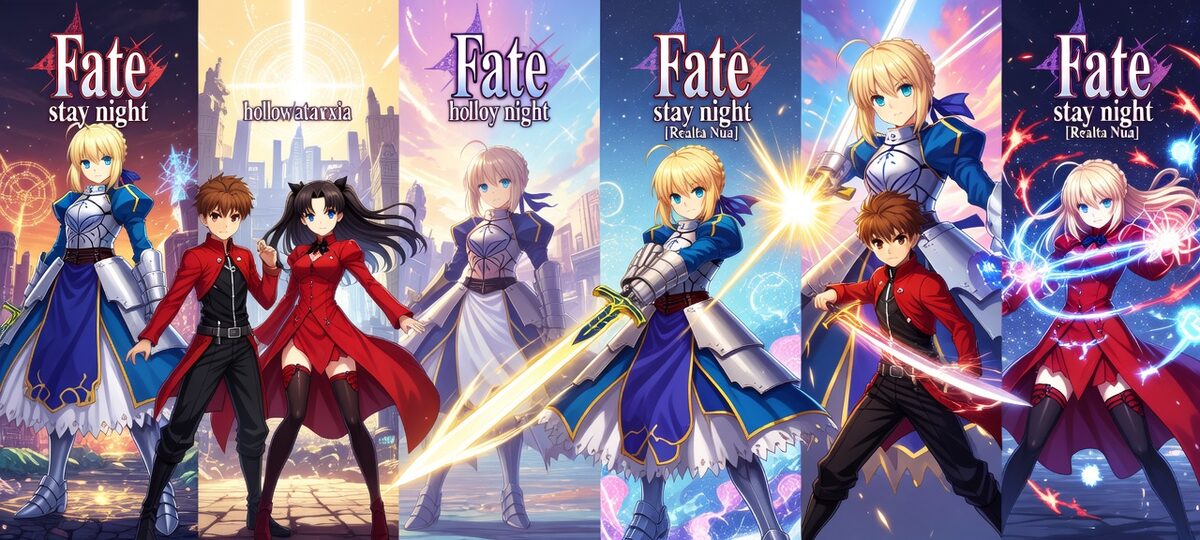

The Fate franchise has tortured anime fans with watch order confusion for over two decades. With dozens of series, movies, and spin-offs spanning multiple timelines, even veteran otaku struggle to navigate Type-Moon's labyrinthine universe. But 2026 brings fresh clarity—and new complications with Fate/strange Fake finally hitting screens.
Whether you're a newcomer intimidated by the sheer scope or a returning fan catching up after years away, this definitive fate watch order guide cuts through the chaos. We'll break down three distinct pathways, explain why certain orders matter, and help you avoid the spoiler landmines that have claimed countless viewers.
Ready to master the Holy Grail War? Let's dive into the ultimate roadmap for experiencing one of anime's most complex—and rewarding—franchises.
Why the Fate Watch Order Matters (And Why It's So Confusing)
What makes the Fate watch order so crucial?
The Fate series isn't just chronologically complex—it's structurally designed to be experienced in specific sequences. Unlike typical anime where episodes build linearly, Fate adapts a branching visual novel with three distinct routes that reveal information in carefully planned layers.
The Visual Novel Problem
Fate/stay night originated as a visual novel with three routes: Fate, Unlimited Blade Works, and Heaven's Feel. Each route assumes you've completed the previous ones, gradually revealing deeper lore about the Holy Grail War, character backstories, and the true nature of the corruption plaguing Fuyuki City.
The anime adaptations scattered these routes across different studios and decades. Studio DEEN tackled the Fate route in 2006, while Ufotable later adapted Unlimited Blade Works (2014-2015) and Heaven's Feel (2017-2020) with vastly superior animation quality.
This creates a dilemma: do you suffer through DEEN's dated animation for proper story progression, or jump straight to Ufotable's sakuga masterpieces and miss crucial setup?
Multiple Studios, Multiple Timelines
Different studios approaching the franchise with varying priorities has fragmented the viewing experience. Ufotable focuses on spectacular action sequences and emotional depth, while Silver Link transforms the property into magical girl comedy with Prisma Illya. A-1 Pictures and CloverWorks handle the Fate/Grand Order adaptations with mixed results.
Each studio brings distinct visual styles and storytelling approaches. This isn't inherently bad—it's given us some of anime's most stunning fight sequences—but it makes creating a cohesive watch order nearly impossible without guidance.
Spoiler Landmines to Avoid
⚠️ SPOILER WARNING - The biggest trap awaiting new viewers is starting with Fate/Zero. Despite being a prequel, Zero assumes you know the outcomes of all three stay night routes. It spoils Sakura's true identity, Saber's real name, and the corruption within the Grail system—revelations meant to shock you across 50+ episodes of buildup.
Similarly, jumping between spin-offs without understanding core lore leaves you confused about fundamental concepts like Command Spells, Servant classes, and why everyone's obsessed with that golden cup.
The Ultimate Fate Watch Order for 2026 (Three Pathways)
Route 1: Beginner-Friendly Path
Perfect for newcomers who want the smoothest entry into the franchise without getting bogged down in production quality debates.
- Fate/stay night: Unlimited Blade Works (2014-2015) - 26 episodes
- Fate/Zero (2011-2012) - 25 episodes
- Fate/stay night: Heaven's Feel Trilogy (2017-2020) - 3 movies
- Fate/stay night (2006) - 24 episodes (optional but recommended)
Time Commitment: ~60 hours
This pathway prioritizes Ufotable's superior animation quality while maintaining story coherence. You'll miss some Fate route context initially, but UBW provides enough character introduction to follow along. The 2006 series becomes supplementary material rather than a barrier to entry.
Route 2: Visual Novel Faithful Path
The "correct" order that mirrors the original visual novel experience, despite animation quality inconsistencies.
- Fate/stay night (2006) - 24 episodes
- Fate/stay night: Unlimited Blade Works (2014-2015) - 26 episodes
- Fate/stay night: Heaven's Feel Trilogy (2017-2020) - 3 movies
- Fate/Zero (2011-2012) - 25 episodes
Time Commitment: ~65 hours
This maintains the intended story progression and character development arcs. Yes, the 2006 animation feels dated compared to modern standards, but it provides essential worldbuilding and the complete Saber character arc that later adaptations reference heavily.
Route 3: Chronological Timeline Path
For viewers who prefer in-universe chronological order, despite the storytelling drawbacks.
- Fate/Zero (2011-2012) - 25 episodes
- Fate/stay night (2006) - 24 episodes
- Fate/stay night: Unlimited Blade Works (2014-2015) - 26 episodes
- Fate/stay night: Heaven's Feel Trilogy (2017-2020) - 3 movies
Time Commitment: ~65 hours
Warning: This order significantly diminishes the impact of major plot reveals and character moments. Only choose this path if you're already familiar with the basic story or absolutely cannot handle non-chronological viewing.
Core Fate/stay night Timeline (Essential Viewing)
Fate/stay night (2006) - Your Starting Point
Studio DEEN's adaptation covers the original Fate route, focusing on Shirou Emiya and Saber's relationship. Despite its reputation for inconsistent animation and pacing issues, this series provides irreplaceable foundation material.
The 2006 version introduces core concepts like the Master-Servant contract system, Noble Phantasms, and the basic rules governing the Holy Grail War. More importantly, it's the only animated adaptation of Saber's complete character arc and her relationship with Shirou.
Key Episodes: Episode 14 reveals Saber's identity as King Arthur, while episodes 20-24 explore the themes of idealism versus pragmatism that define the entire franchise.
Fate/Zero - The Prequel Dilemma
Ufotable's masterpiece serves as both the franchise's highest point and its biggest newcomer trap. Gen Urobuchi's dark, mature storytelling combined with incredible animation creates one of anime's finest war dramas.
⚠️ SPOILER WARNING - Zero assumes you know that Sakura is actually Sakura Matou, that the Holy Grail is corrupted, and that Saber fought in the previous war. These revelations lose all impact if experienced before the main story routes.
The series excels at character development for Kiritsugu Emiya, Saber, and Gilgamesh. The famous Kiritsugu vs Kirei philosophical debates and the tragic Banquet of Kings scene represent peak Fate storytelling.
Unlimited Blade Works - The Definitive Route
Ufotable's 2014-2015 adaptation represents the gold standard for Fate adaptations. The series perfectly balances action, character development, and thematic depth while showcasing some of anime's most spectacular fight choreography.
Archer's identity revelation in episode 20 ranks among anime's greatest plot twists. The series explores themes of heroism, sacrifice, and whether idealistic goals justify terrible means. Shirou's character development feels more natural here than in other routes.
The Shirou vs Archer fight sequence demonstrates why Ufotable earned its reputation for incredible sakuga. Every frame drips with emotional weight and visual splendor.
Heaven's Feel Trilogy - The Dark Conclusion
The movie trilogy serves as the franchise's darkest and most mature entry. Sakura Matou takes center stage as both love interest and primary antagonist, creating genuine moral complexity rarely seen in anime.
Movie I: Presage Flower establishes the altered Holy Grail War dynamics and Sakura's growing importance. Movie II: Lost Butterfly dives deep into psychological horror territory with Dark Sakura's emergence. Movie III: Spring Song provides a satisfying conclusion to both Sakura's arc and the entire stay night storyline.
The trilogy's animation quality surpasses even Zero and UBW, particularly during the Salter vs Berserker fight and the climactic Shirou vs Kirei battle.
Fate Spin-offs and Alternate Timelines
Fate/Grand Order Adaptations
The mobile game's anime adaptations vary wildly in quality and accessibility. First Order (2016) provides a decent introduction to the game's premise, while Absolute Demonic Front: Babylonia (2019) offers the franchise's best standalone story.
Babylonia requires minimal Fate knowledge and features excellent animation courtesy of CloverWorks. The Gilgamesh character development and Tiamat finale create genuine emotional stakes despite the episodic structure.
Avoid Fate/EXTRA Last Encore unless you're a completionist. Shaft's experimental approach creates a confusing mess that satisfies neither newcomers nor franchise veterans.
Fate/kaleid liner Prisma Illya
Silver Link's magical girl parody transforms the serious Fate universe into comedy gold. Illya becomes a magical girl alongside Miyu, fighting corrupted Class Cards in an alternate timeline.
The series starts as pure comedy but gradually incorporates serious Fate lore. 3rei!! (the fourth season) features genuine emotional depth and spectacular fight sequences that rival the main series.
Warning: The series includes questionable fan service involving underage characters. Approach with caution if this content bothers you.
Fate/strange Fake (2024-2026)
The newest addition to the franchise promises a fresh take on the Holy Grail War formula. Set in Snowfield, Nevada, the series features a corrupted Grail War with multiple Saber-class Servants and American Masters.
Early episodes showcase A-1 Pictures' improved animation quality and Narita Ryohgo's complex storytelling. The series assumes deep Fate knowledge, making it unsuitable for newcomers but potentially rewarding for franchise veterans.
Production delays have pushed most episodes into 2026, but early reactions suggest quality comparable to Ufotable's work.
Lord El-Melloi II Case Files
This detective series bridges Fate/Zero and stay night while exploring the Clock Tower magical society. Waver Velvet returns as an adult Lord investigating supernatural mysteries.
The series provides excellent worldbuilding for Fate's magical systems while maintaining a lighter tone than the main entries. Troyca's animation feels competent if unremarkable.
What's New in 2026: Fate/strange Fake and Beyond
Fate/strange Fake Episode Schedule
A-1 Pictures plans monthly episode releases throughout 2026, following the Demon Slayer model of high-quality, limited episodes. This approach should maintain animation consistency while building anticipation between releases.
The adaptation covers the True and False Holy Grail War arc, featuring fan-favorite characters like False Berserker and the mysterious Flat Escardos. Early promotional material suggests faithful adaptation of Narita Ryohgo's complex plotting.
Upcoming Type-Moon Projects
Type-Moon celebrates its 20th anniversary in 2026 with several announced projects. A Tsukihime anime adaptation remains in pre-production, potentially bringing Arcueid and the True Ancestors to screens for the first time.
Fate/Grand Order continues generating new story content, with Lostbelt adaptations planned through 2027. The Cosmos in the Lostbelt storyline promises darker themes and higher stakes than previous game content.
20th Anniversary Celebrations
Anniversary events include Ufotable retrospective screenings, Type-Moon merchandise collaborations, and potential announcements for Fate/hollow ataraxia adaptations. Fan speculation centers around a possible Fate/stay night complete remake combining all three routes.
Where to Watch Every Fate Series Legally
Crunchyroll's Complete Collection
Crunchyroll offers the most comprehensive Fate catalog, including:
- Fate/stay night (2006) - Complete series
- Fate/Zero - Both seasons
- Fate/stay night: Unlimited Blade Works - Complete series + OVA
- Fate/stay night: Heaven's Feel - All three movies
- Fate/Grand Order adaptations - First Order, Babylonia, Camelot movies
- Fate/kaleid liner Prisma Illya - All seasons
- Fate/strange Fake - New episodes as they release
Premium subscribers get simulcast access and HD streaming for all titles.
Netflix Regional Availability
Netflix carries select Fate titles depending on your region:
- United States: Fate/Zero, Heaven's Feel trilogy
- Japan: Full catalog including spin-offs
- Europe: Limited selection, varies by country
The Heaven's Feel movies frequently rotate in and out of the catalog, so watch quickly when available.
Other Streaming Options
HIDIVE occasionally hosts older titles like the 2006 stay night series and EXTRA Last Encore. Funimation (now part of Crunchyroll) previously held some licenses but has migrated most content.
For movie rentals, Amazon Prime Video, Apple TV, and Google Play offer the Heaven's Feel trilogy for $3.99-$5.99 per film.
Common Fate Watch Order Mistakes to Avoid
The Zero-First Trap
Starting with Fate/Zero remains the most common and damaging mistake new viewers make. The series' superior animation and mature themes create a false impression that it's the proper starting point.
Zero spoils every major plot twist from the main story routes. Sakura's true identity, the Grail's corruption, and Saber's backstory lose all emotional impact when revealed casually in Zero's early episodes.
The series also assumes familiarity with Servant classes, Noble Phantasm mechanics, and the basic Holy Grail War structure that the main series carefully explains.
Skipping the 2006 Adaptation
Many viewers skip DEEN's 2006 adaptation due to its dated animation and mixed reputation. This creates significant gaps in character understanding and thematic development.
The 2006 series provides Saber's complete character arc, including her relationship with Shirou and resolution of her kingly duties. Later adaptations reference these developments without proper explanation.
Shirou's character growth also feels more natural when experienced across all three routes rather than jumping directly to UBW or Heaven's Feel.
Spin-off Confusion
Jumping into spin-offs like Prisma Illya or Grand Order without main series context creates confusion about basic franchise concepts. These series assume familiarity with Servant summoning, Master-Servant contracts, and the general Holy Grail War mythology.
Lord El-Melloi II specifically requires Fate/Zero knowledge, as Waver Velvet serves as the protagonist. Strange Fake assumes deep lore familiarity and references events from multiple timeline branches.
Always complete the core timeline before exploring alternate universes and spin-offs.
After Fate: What to Watch Next
Similar Battle Royale Anime
If you enjoyed Fate's battle royale structure and complex character motivations, consider these recommendations:
Future Diary offers psychological thriller elements with supernatural death games. Deadman Wonderland provides similar dark themes and morally complex characters. For a lighter take, BTOOOM! applies battle royale mechanics to gaming scenarios.
More recent series like Darwin's Game and Platinum End modernize the death game formula with smartphone integration and contemporary settings.
More Ufotable Masterpieces
Ufotable's incredible animation quality extends beyond Fate. Demon Slayer showcases similar sakuga excellence with more accessible storytelling. The studio's Tales of game adaptations demonstrate their skill with fantasy action sequences.
God Eater represents their earlier work, while Demon Slayer: Mugen Train proves their mastery of emotional storytelling combined with spectacular visuals. For deeper analysis of their techniques, check out our Frieren Review 2026: Why Beyond Journey's End is Anime's Masterpiece which explores similar themes of heroism and sacrifice.
Type-Moon Universe Expansions
Tsukihime and Melty Blood expand the