
So You Want to Watch Anime — Welcome, You're Going to Love It Here
Maybe a friend keeps telling you to watch this one show. Maybe an incredible clip showed up in your social feed and you thought, "Wait, animated shows can look like that?" Maybe you loved Avatar: The Last Airbender growing up and someone finally told you, "If you liked that, you need to try actual anime."
Whatever brought you here, you're standing at the entrance to one of the most creative, emotionally powerful, and wildly diverse storytelling traditions on the planet. This guide is going to make sure you walk through that door feeling confident, not overwhelmed. By the time you finish reading, you'll know exactly what anime is, where to watch it, what to watch first, and how to talk about it without feeling lost. Let's go.
What Is Anime, Really?
The short answer is "animation from Japan." The real answer is bigger than that.
Anime is a storytelling medium that spans every genre you can imagine — horror, romance, political thriller, sports drama, sci-fi epic, cozy slice-of-life, surreal comedy — and several genres you probably can't imagine yet. Unlike Western animation, which has historically been marketed primarily toward children, anime has always been made for every age group. There are anime series aimed at young kids, teenagers, working adults, and everyone in between.
What sets anime apart isn't just the art style (though those expressive eyes and dynamic action sequences are iconic). It's the willingness to tell long, complex, emotionally ambitious stories. Anime will make you ugly-cry over a volleyball match. It will make you question your moral framework through a notebook that kills people. It will make you feel genuine grief for a character you've only known for twelve episodes.
The production process is also unique. Most anime originates from manga (Japanese comics), light novels, visual novels, or web novels. A studio adapts the source material into animated episodes, usually airing in seasonal blocks. This means anime often has rich source material backing it up, giving stories remarkable depth and consistency.
If you want to dive deeper into the different categories, our complete anime genres guide breaks down every major genre with recommendations for each.
A Quick History — How We Got Here
Anime's roots stretch back to the early 1900s, but the modern era really begins with Osamu Tezuka, often called the "God of Manga." His 1963 series Astro Boy became the first widely popular anime television show and established many conventions — large eyes, dramatic expressions, limited-frame animation techniques — that still define the medium.
Through the 1970s and 1980s, anime grew more ambitious. Mobile Suit Gundam launched the mecha genre. Dragon Ball became a global phenomenon. Studio Ghibli, founded by Hayao Miyazaki and Isao Takahata in 1985, began producing films that rivaled anything coming out of Disney or Pixar in artistry and emotional depth.
The 1990s and 2000s brought anime to the global mainstream. Pokémon, Naruto, Bleach, and One Piece became household names. Streaming services then blew the doors wide open in the 2010s — suddenly you didn't need to hunt for fan-subtitled downloads on obscure forums. You could just open Crunchyroll and press play.
Today, in 2026, anime is a global powerhouse. Studios like MAPPA, ufotable, and Wit Studio produce animation that rivals major Hollywood productions in visual quality. Anime films regularly top box office charts worldwide. And the community has never been more welcoming to newcomers.
Sub vs. Dub: The Great Debate (That Doesn't Need to Be a Debate)
You'll hear this one early: should you watch anime with subtitles (the original Japanese audio) or dubbed into English?
Here's the honest answer: watch whichever way lets you enjoy the story. That's it. That's the whole answer.
But since you'll want to make an informed choice, here are the real tradeoffs:
Subtitles (Sub) preserve the original voice performances, which are often extraordinary. Japanese voice actors (called "seiyuu") are highly trained specialists, and their emotional range can be stunning. The tradeoff is that you need to read while watching, which means you might miss visual details during fast-paced scenes.
English Dubs let you watch the screen without reading, which is great for action-heavy shows. Modern dubs have improved dramatically — shows like Fullmetal Alchemist: Brotherhood, Cowboy Bebop, and My Hero Academia have exceptional English casts. The tradeoff is that some emotional nuance can shift in translation.
The beginner-friendly approach: Start with dubs if reading subtitles feels distracting. As you get more comfortable, try subs for a show or two. Many fans watch both depending on the series. You'll develop your own preference naturally.
Where to Watch: Streaming Platforms in 2026
You need a place to actually watch these shows. Here's the current landscape, and for even more detail, check out our complete streaming platform comparison.
Crunchyroll is the single biggest anime-specific platform. After absorbing Funimation's library, it now houses the largest collection of subbed and dubbed anime anywhere. Simulcasts (new episodes within hours of Japanese broadcast) are its biggest strength. At around $8/month for ad-free premium, it's the default recommendation for anyone serious about anime.
Netflix has invested heavily in anime and now hosts a strong library including exclusives like Sakamoto Days, Scott Pilgrim Takes Off, and a growing slate of originals. The interface is beginner-friendly, dub options are extensive, and you might already be paying for it. Downside: its catalog rotates, so shows come and go.
HIDIVE at $4.99/month is the hidden gem platform. It carries niche titles, uncensored versions, and genres that the bigger platforms sometimes underserve. Great for when you've watched the mainstream hits and want to explore deeper.
Amazon Prime Video occasionally lands major exclusives, and Disney+ has quietly added select anime titles. If you already subscribe to either, they're worth browsing.
Free options include Crunchyroll's ad-supported tier and Tubi, which carries a decent selection of older titles at no cost.
The practical move: Start with Crunchyroll or Netflix (or both). Between those two, you'll have access to almost every show on this guide's recommendation lists.
Your First 10 Anime: The Perfect Starter Lineup
This is the list I wish someone had handed me when I started. These ten shows are carefully chosen to showcase anime's range — action, emotion, humor, mystery, beauty — while being genuinely accessible to someone who has never watched a single episode. Each one stands on its own, requires no prior anime knowledge, and will leave you wanting more.
- Death Note (37 episodes) — A high-school genius finds a supernatural notebook that kills anyone whose name is written in it, then decides to remake the world. This is the ultimate "one more episode" show. The cat-and-mouse battle between Light and the detective L is so tightly written that it hooks people who swore they'd never watch anime. Start here if you love psychological thrillers, crime dramas, or shows like Breaking Bad.
- Fullmetal Alchemist: Brotherhood (64 episodes) — Two brothers use forbidden alchemy to try to resurrect their mother, and it goes horribly wrong. Their journey to set things right is funny, devastating, action-packed, and deeply human. Widely considered one of the greatest anime ever made, period. The English dub is also phenomenal.
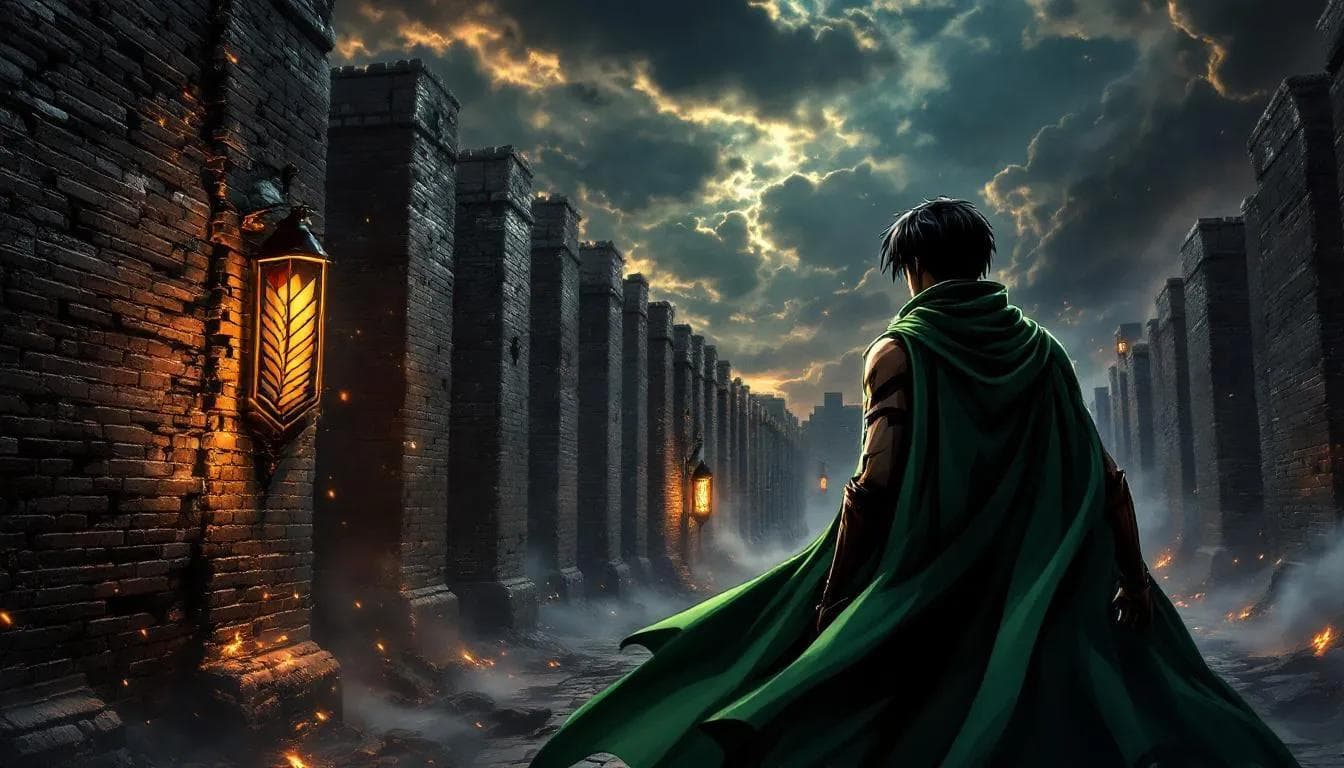
- Attack on Titan (88 episodes across four seasons) — Humanity lives behind massive walls to survive giant humanoid Titans. When the walls are breached, a young soldier vows to destroy every last Titan. What starts as a survival thriller evolves into one of the most complex geopolitical narratives in any medium. For a deep dive into its conclusion, read our Attack on Titan ending explained breakdown.
- Spy x Family (37+ episodes) — A spy must build a fake family for a mission. His adopted daughter is secretly a telepath. His fake wife is secretly an assassin. None of them know each other's secrets. It's warm, hilarious, and genuinely heartfelt — the perfect show to watch when you want something lighter but still smart.
- Demon Slayer (44+ episodes) — A kind-hearted boy's family is slaughtered by demons, and his sister is turned into one. He becomes a demon slayer to find a cure. The story is straightforward and emotionally resonant, but the real draw is the animation — ufotable's fight scenes are legitimately some of the most beautiful animation ever produced. Curious about the power levels? Check out our Demon Slayer power rankings.
- Steins;Gate (24 episodes) — A self-proclaimed "mad scientist" accidentally invents time travel using a microwave and a cell phone. What starts as quirky comedy slowly becomes a gut-wrenching thriller about consequences and sacrifice. The first few episodes are a slow burn, but the payoff is one of the most rewarding in all of anime. Trust the process.
- Mob Psycho 100 (37 episodes) — An absurdly powerful psychic middle-schooler just wants to be normal. Created by the same person behind One Punch Man, it's a hilarious, visually inventive show with a surprisingly profound message about self-improvement and what it means to be a good person.
- Vinland Saga (48 episodes) — A Viking revenge epic that transforms into a meditation on violence, peace, and what it means to be a true warrior. Season one is brutal action. Season two is quiet, philosophical, and somehow even more gripping. If you love historical drama, this is your entry point.
- Your Lie in April (22 episodes) — A piano prodigy who lost his ability to hear music meets a free-spirited violinist who brings color back into his life. It's gorgeous, musically rich, and emotionally devastating in the best possible way. Keep tissues nearby.
- Cowboy Bebop (26 episodes) — Bounty hunters drift through space in a beat-up ship, chasing criminals and running from their pasts. The jazz soundtrack is iconic, the style is effortlessly cool, and each episode is a self-contained gem. Often recommended as the single best "first anime" for adults who think anime isn't for them.
Beyond the First 10: More Essential Starter Anime
Once you've gotten your feet wet, these are the natural next steps:
- One Piece — The sprawling pirate adventure that has captivated millions for over two decades. Yes, it's long. Yes, it's worth it. Our One Piece filler list will help you skip the non-essential episodes and streamline your watch.
- Jujutsu Kaisen — Dark, stylish, and loaded with jaw-dropping fight choreography. The cursed energy system is one of the best power systems in modern shonen.
- Haikyuu!! — You don't need to care about volleyball to love this show. The character development and match tension will have you screaming at your screen.
- Kaguya-sama: Love Is War — Two geniuses are in love but refuse to confess first, turning every interaction into a hilarious psychological battle. Romantic comedy at its absolute peak.
- Frieren: Beyond Journey's End — An elf mage reflects on her thousand-year life after her adventuring party disbands. Quiet, beautiful, and emotionally devastating in subtle ways. One of the best anime of the 2020s.
- Bocchi the Rock! — A socially anxious girl joins a rock band. The animation is wildly creative, the humor is relatable, and the music genuinely slaps. Perfect if you want something feel-good.
- Sakamoto Days — A legendary hitman retires to run a convenience store with his family. When his past catches up, the action is explosive and the comedy is sharp. One of the strongest new shows of 2026.
For a look at what else is airing right now, check out our top anticipated anime of Winter 2026.
Essential Anime Terminology: Your Cheat Sheet
Walk into any anime discussion and you'll hear terms that sound like a foreign language. Here's your decoder ring:
- Shonen — Anime/manga targeted at teen boys. Think action, adventure, and tournament arcs (Naruto, Dragon Ball, My Hero Academia).
- Shojo — Anime/manga targeted at teen girls. Often romance-focused but far more diverse than the label suggests (Fruits Basket, Sailor Moon).
- Seinen — Anime/manga for adult men. More mature themes, complex narratives (Vinland Saga, Berserk).
- Josei — Anime/manga for adult women. Realistic romance and drama (Nana, Paradise Kiss).
- Isekai — "Another world." The protagonist gets transported to a fantasy world, usually with overpowered abilities (Re:Zero, That Time I Got Reincarnated as a Slime).
- Mecha — Giant robots. Piloted, sentient, or both (Gundam, Evangelion, Code Geass).
- OVA (Original Video Animation) — Episodes released directly to home video rather than broadcast. Often bonus content or side stories.
- ONA (Original Net Animation) — Anime released directly online rather than on TV. Increasingly common in the streaming era.
- Simulcast — When a streaming platform releases new episodes simultaneously (or near-simultaneously) with the Japanese broadcast.
- Seiyuu — Japanese voice actor. These are genuine celebrities in Japan with dedicated fanbases.
- Sakuga — A term for exceptionally high-quality animation sequences. When fans share clips saying "look at this sakuga," they mean the animation itself is art.
- Filler — Episodes that aren't based on the source material, added to give the manga time to get ahead. Some filler is great; most is skippable.
- Canon — Events that actually happened in the original story, as opposed to filler.
- Cour — A broadcast block of roughly 12-13 episodes (one TV season in Japan). A "2-cour" show runs 24-26 episodes.
- OP/ED — Opening and ending theme songs. Anime OPs and EDs are often fantastic and become part of the experience. Don't skip them — at least not the first time.
How Anime Seasons Work
This confuses a lot of newcomers, so let's clear it up.
Japanese anime follows a seasonal broadcast schedule tied to the calendar year:
- Winter (January - March)
- Spring (April - June)
- Summer (July - September)
- Fall (October - December)
Each season, a new batch of shows premieres. Most anime runs for one or two cours (12-13 or 24-26 episodes). A show might air in Winter 2026, take a break, then return in Fall 2026 for its second season.
This is why you'll see fans talking about "the Winter 2026 season" or "Fall lineup" — they're referring to which batch of new shows is currently airing. Seasonal charts on sites like MyAnimeList and AniChart show you everything premiering each season at a glance.
Long-running shows like One Piece are the exception — they air continuously year-round without seasonal breaks.
For help figuring out what order to watch shows that have multiple seasons, movies, and OVAs, our ultimate watch order guide has you covered.
How to Avoid Spoilers (A Survival Guide)
Anime communities are passionate, which is wonderful — except when someone casually drops a massive spoiler in a comment section. Here's how to protect yourself:
- Stay out of series-specific subreddits until you're caught up. Spoiler tags exist but aren't used consistently.
- Don't Google character names. Autocomplete will betray you. "Is [character] dea—" and now you know.
- Be careful with YouTube. Thumbnails and titles for anime analysis videos are spoiler minefields.
- Mute keywords on social media. Twitter/X and other platforms let you mute specific terms. Use this aggressively for shows you're currently watching.
- Watch seasonally if possible. Following a show as it airs means the whole community is at the same point, and discussion threads are clearly labeled by episode.
Common Beginner Mistakes (And How to Dodge Them)
Every anime fan makes a few of these early on. Save yourself the trouble:
Starting with a 500+ episode show. One Piece and Naruto are incredible, but jumping into a massive commitment before you even know if you like the medium is a recipe for burnout. Start with a 12-26 episode series, fall in love with the format, then tackle the epics.
Judging all anime by one show. If you watched one series and didn't like it, you haven't "tried anime" — you've tried one show. Anime spans every genre imaginable. Hating Dragon Ball doesn't mean you won't love Your Lie in April. Give at least three very different shows a chance before forming an opinion.
Forcing yourself to finish shows you're not enjoying. Life is short and anime is abundant. There's no shame in dropping a show at episode 3 if it's not clicking. Your "dropped" list is a sign of a healthy, discerning viewer — not a quitter.
Skipping the opening and ending songs. Anime OPs and EDs are crafted with care, often contain foreshadowing, and feature some genuinely fantastic music. Watch them at least once per arc. Many fans consider the openings part of the experience.
Getting caught up in "must watch" lists instead of following your interests. Recommendation lists (including this one) are starting points, not assignments. If a show everyone loves isn't clicking with you, move on. The "best" anime is the one you personally enjoy.
Ignoring movies and short series. Some of the greatest works in anime are films (Spirited Away, Your Name, A Silent Voice) or single-season shows. You don't need hundreds of episodes for a life-changing experience.
Anime Culture and Community
Part of what makes anime special is the community around it. Here's where to connect:
MyAnimeList (MAL) is the de facto database and social platform for anime fans. Create a free account, track what you've watched, rate shows, and discover new ones based on recommendations. Your MAL profile becomes your anime resume.
AniList is the modern alternative to MAL with a cleaner interface and better social features. Many newer fans prefer it. Same concept — track, rate, discover.
Reddit has thriving anime communities. r/anime is the main hub with millions of members. Episode discussion threads for airing shows are a weekly highlight. r/animesuggest is specifically designed to help people find their next watch.
Discord servers exist for virtually every popular anime, plus general anime discussion servers. These are great for real-time conversations and finding watch buddies.
Anime conventions are where the community comes alive in person. Events like Anime Expo (Los Angeles), Anime NYC, and Crunchyroll Expo feature screenings, panels with voice actors and creators, cosplay, artist alleys, and a sense of belonging that's hard to replicate online. If there's a con near you, even a small local one, it's worth attending at least once.
Anime YouTube is a massive ecosystem. Channels dedicated to analysis, reviews, lore breakdowns, and recommendations can deepen your appreciation for shows you've watched. Just be careful about spoilers for shows you haven't seen yet.
From Casual to Otaku: Your Progression Path
Everyone's anime journey follows its own path, but here's roughly how it tends to go:
Phase 1: The Gateway (Months 1-3). You watch your first few shows, probably mainstream hits. You're constantly amazed that animation can be this good. You tell friends about this show they "have to watch." You start recognizing common tropes and voice actors.
Phase 2: The Deep Dive (Months 3-8). You've blown through the popular stuff and you're hungry for more. You start exploring specific genres that resonate with you. You create a MAL or AniList account because you need to track everything. You have opinions about studios now. You know that ufotable means the fights will look incredible and that Kyoto Animation means the emotional moments will destroy you.
Phase 3: The Connoisseur (Months 8-18). You're watching seasonal anime as it airs. You have a watchlist that's longer than your lifetime. You've started reading manga for shows where the anime hasn't caught up. You can identify animation quality differences between episodes. You might attend your first convention.
Phase 4: The Veteran (Year 2+). You've settled into your preferences but still explore. You appreciate older classics alongside new releases. You might be reading light novels, collecting figures, or creating fan content. You've become the friend who gives anime recommendations to beginners — and the cycle continues.
The beautiful thing is that every phase is equally valid. You don't need to reach "Phase 4" to be a real anime fan. Watching two shows a year and loving them makes you just as much a fan as someone who watches two shows a week.
Frequently Asked Questions
Is anime only for kids?
Absolutely not. While some anime is designed for children, the medium spans every age range and maturity level. Series like Vinland Saga, Steins;Gate, and Monster deal with complex adult themes — morality, grief, political intrigue, existential philosophy. Anime is a medium, not a genre, and it has something for literally everyone.
Do I have to watch anime in Japanese with subtitles?
No. Many anime have excellent English dubs, and watching dubbed is a completely valid way to enjoy the medium. Start with whichever feels more comfortable. Shows like Cowboy Bebop and Fullmetal Alchemist: Brotherhood are widely considered to have English dubs that match or exceed the Japanese originals.
Where should I start if I only have time for one show?
Death Note if you want something gripping and fast-paced. Spy x Family if you want something fun and heartwarming. Cowboy Bebop if you're an adult who's skeptical about anime. All three are relatively short and universally appealing.
What's the difference between anime and cartoons?
Technically, anime is a subset of animation — specifically animation produced in Japan or in a distinctly Japanese style. The practical difference is cultural. Anime tends to tell serialized, long-form stories with complex character development, while Western cartoons have traditionally (though not always) been episodic and comedy-focused. The line is blurring as both industries influence each other, but the storytelling traditions remain distinct.
Is it okay to skip filler episodes?
Yes, and many fans recommend it for longer series. Filler episodes — those not based on the original source material — can slow down pacing without advancing the story. Community-maintained filler guides exist for virtually every long-running series and can save you dozens of hours.
Your Journey Starts Now
Here's the secret that every anime fan knows but rarely says out loud: the best time to get into anime was ten years ago. The second best time is right now.
You have access to more incredible anime, on more platforms, with better translations and higher production quality than at any point in history. The community is more welcoming than ever. The barrier to entry is literally just pressing play.
Don't try to watch everything. Don't worry about watching things in the "right" order. Don't stress about whether you're a sub person or a dub person. Just pick a show from this guide that sounds interesting, start the first episode, and let the story take you somewhere new.
Welcome to anime. You're going to love it here.