
Attack on Titan Ending Explained: Complete Analysis
Complete breakdown of the controversial Attack on Titan finale and what it all means.
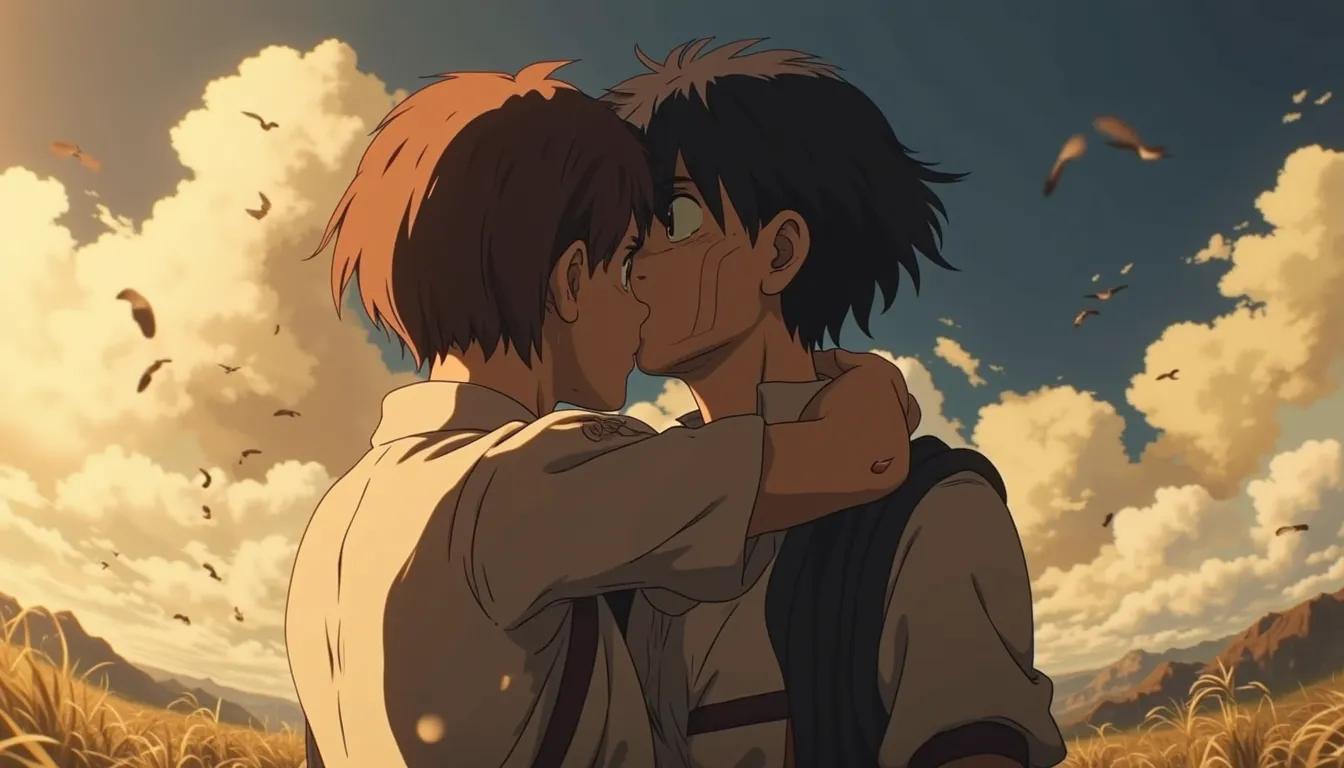
Attack on Titan Ending Explained: The Complete Analysis of Eren's Plan, the Rumbling, and What It All Means
SPOILER WARNING: This article contains massive spoilers for the entire Attack on Titan manga and anime, including the final chapter (Chapter 139), the extra pages, and The Final Season. If you have not finished the series, turn back now. Everything is discussed openly below.
The ending of Attack on Titan (Shingeki no Kyojin) is one of the most debated conclusions in anime and manga history. When Chapter 139 dropped in April 2021, it fractured one of the largest fandoms in the medium. Some readers praised Hajime Isayama for delivering a tragic, thematically resonant conclusion. Others felt betrayed by character choices that seemed to contradict years of careful development. The anime adaptation by MAPPA, which concluded in late 2023, added new layers of context that shifted perspectives yet again.
What makes the Attack on Titan ending so fascinating is that both sides of the debate have legitimate points. This is not a story with a simple "good" or "bad" ending — it is a conclusion that demands careful analysis, one that reveals more of itself the deeper you look. Whether you walked away satisfied or frustrated, this guide will break down every major element: Eren's true motivations, the mechanics of Paths and the time loop, Ymir Fritz's 2,000-year wait, the Rumbling and its aftermath, the significance of the extra pages, and the thematic architecture that ties it all together.
If you are looking for context on where Attack on Titan fits in the broader anime landscape, our Ultimate Power Rankings covers how the series stacks up against other legendary titles.
Eren's True Motivations Explained
Eren Yeager's character arc is the axis on which the entire ending turns, and it is easily the most misunderstood element of the finale. To grasp what Eren was actually doing, you need to hold two contradictory truths at once: Eren was simultaneously a calculating mastermind who orchestrated events across time, and a broken young man who never wanted any of it.
The Burden of Future Memories
When Eren kissed Historia's hand during the medal ceremony in Season 3, he received a cascade of future memories from his own use of the Attack Titan's and Founding Titan's powers. He saw the Rumbling. He saw his friends stopping him. He saw his own death. From that moment forward, Eren was no longer the reactive fighter audiences had known for three seasons. He became someone walking a path he had already seen, trapped by knowledge he could not escape.
This is the cruelest aspect of Eren's situation. The Attack Titan's defining ability — seeing the memories of future inheritors — meant that Eren's future self had already sent these visions backward. He did not choose the Rumbling in the way we normally understand choice. He saw that he would do it, understood why his future self deemed it necessary, and then walked toward that future because he could see no alternative. The question of whether Eren had genuine free will is one of the story's most important philosophical tensions, and Isayama deliberately leaves it unresolved.
What Eren Actually Wanted
Chapter 139 reveals Eren's private confession to Armin inside the Paths dimension. Stripped of his stoic facade, Eren admits several things that recontextualize his entire final arc. He confesses that he does not want Mikasa to move on — a painfully human, selfish admission from someone who had presented himself as beyond such feelings. He admits that he would have carried out the Rumbling to completion even if his friends had not stopped him, because something inside him simply wanted to flatten the world and start over. And he reveals that his deepest, most childish motivation was a desire rooted in the very first episode: he wanted to see the world beyond the walls, free and open, like the landscapes Armin showed him in that forbidden book.
Eren's motivations exist on multiple layers simultaneously. On the strategic level, he was creating a scenario where his friends could become heroes by stopping him, ensuring Paradis Island's safety through their diplomatic leverage. On the emotional level, he was a traumatized young man who had been carrying the weight of omniscience since he was fifteen, and who simply broke under it. On the thematic level, he represents the ultimate failure of seeking freedom through violence — a boy who wanted to be free more than anything, and whose pursuit of that freedom consumed him and everyone around him.
The Lelouch Comparison and Why It Falls Short
Many fans immediately compared Eren's plan to Lelouch vi Britannia's "Zero Requiem" from Code Geass, in which a ruler makes himself the world's villain so that his death unites humanity. The comparison is understandable but ultimately insufficient. Lelouch's plan works cleanly — he dies, the world is at peace, and the narrative presents it as a noble sacrifice. Eren's plan is messier by design. He killed eighty percent of humanity. The peace his sacrifice creates is fragile and temporary, as the extra pages make painfully clear. Isayama is not telling a story about a noble sacrifice that works. He is telling a story about the delusion of thinking any single act of violence, no matter how large, can permanently end the cycle of conflict.
The Rumbling and Its Consequences
The Rumbling — the unleashing of millions of Colossal Titans from within the three Walls to flatten the outside world — is Attack on Titan's apocalyptic climax and the event that defines the ending's moral complexity.
The Scale of Destruction
Eren, wielding the power of the Founding Titan, commands the Wall Titans to march outward from Paradis Island and trample every civilization beyond the sea. By the time Mikasa kills Eren and ends the Rumbling, approximately eighty percent of humanity outside Paradis has been destroyed. Entire nations, cultures, histories — wiped out in a matter of days. The sheer scale of the atrocity is something the anime adaptation conveyed with devastating effectiveness, showing civilians in Marley and beyond being crushed under an endless wall of steam and bone.
Was the Rumbling "Necessary"?
This is the question at the heart of the ending's moral debate. Eren and his supporters on Paradis believed the outside world would never accept the Eldian people. Decades of propaganda had turned Eldians into devils in the eyes of the global population, and every diplomatic attempt had failed. Willy Tybur's declaration of war made it clear that the world intended to unite for the annihilation of Paradis Island. From a purely strategic standpoint, Eren's argument — that Paradis would be destroyed without drastic action — is not without merit.
But the Rumbling was not a surgical strike or a defensive action. It was omnidirectional genocide. Eren killed billions of people who had no involvement in the conflict with Paradis, including Eldians living in internment zones around the world. The series never allows the audience to forget this. The trampled corpses, the fleeing families, the crushed refugee camps — Isayama forces readers and viewers to sit with the horror, refusing to sanitize it. Whatever strategic justification Eren constructed, the Rumbling remains an unambiguous atrocity, and the story treats it as one.
The Aftermath and the Extra Pages
The original Chapter 139 ended on a cautiously hopeful note: Armin and the surviving Alliance members serve as peace ambassadors, traveling to Paradis to negotiate with the Yeagerist government. But the extra pages Isayama added for the volume release changed the calculus significantly. They show Paradis Island, generations later, being bombed into rubble during a future war. The tree where Eren is buried grows enormous, resembling the tree where Ymir first encountered the source of Titan power, and a child approaches it — implying the cycle may begin again.
These extra pages are devastating because they undermine the notion that Eren's sacrifice accomplished anything lasting. Peace did not hold. Paradis was eventually destroyed anyway. The cycle of violence continued, just as it always has in human history. For many fans, this was a nihilistic gut punch. For others, it was Isayama's most honest and courageous storytelling choice — a refusal to pretend that any single act, however extreme, can permanently solve the problem of human conflict.
Ymir's Role and the Curse of the Titans
Ymir Fritz is the linchpin of the entire mythology, and her resolution in the finale is one of its most emotionally complex elements.
The 2,000-Year Wait
Ymir was the original Titan, a slave girl who gained the power of the Titans roughly 2,000 years before the main story. She served King Fritz — a cruel man who used her as a weapon and a breeding tool. Even after death, Ymir continued to serve in the Paths dimension, constructing Titan bodies for every Eldian who transformed across two millennia. She was bound not by physical chains but by emotional ones: a twisted attachment to Fritz that she mistook for love.
This is perhaps the most controversial element of the ending. The revelation that Ymir's 2,000-year bondage was rooted in a form of love — that she stayed because she loved Fritz — strikes many readers as a problematic framing of an abuse victim's psychology. Others interpret it as Isayama's unflinching depiction of how trauma bonding works: that victims of abuse can develop attachments to their abusers that are irrational, destructive, and not easily broken from the outside. The story does not endorse Ymir's feelings for Fritz as healthy or justified. It presents them as the tragic mechanism that kept the Titan curse alive.
Why Mikasa Was the Key
Ymir waited 2,000 years for someone who could do what she could not: kill the person they loved most, and choose freedom over attachment. Mikasa's decision to kill Eren — the person she loved more than anyone in the world — was the act that finally showed Ymir it was possible to let go. By witnessing Mikasa's choice, Ymir found the strength to release her attachment to Fritz and end the Titan curse entirely.
This is why the final panel of Eren's Titan form shows Ymir smiling as the power of the Titans dissolves. It is not about Eren's plan succeeding or failing. It is about a slave girl who finally found freedom through someone else's example. The entire 2,000-year history of Titans, the wars, the hatred, the cycles of violence — all of it existed because one traumatized girl could not let go. And it ended because another girl, equally devoted, found the strength to do so.
The Time Loop and Paths Mechanics
The Paths dimension is Attack on Titan's metaphysical backbone, and understanding it is essential to grasping how the ending functions.
How Paths Work
In the Attack on Titan universe, all Subjects of Ymir (Eldians) are connected through an invisible network called Paths. These paths converge at a single point: the Coordinate, located in a timeless dimension where Ymir constructs Titan bodies from sand. Time does not function linearly in Paths. A moment in the real world can correspond to years, decades, or centuries in the Paths dimension.
The Founding Titan can access the Coordinate and manipulate Paths, altering the bodies and memories of all Eldians. The Attack Titan has a unique additional ability: it can receive memories from future inheritors. This creates a causal loop — future events influence past decisions, which in turn create the future events that sent those memories back. It is a closed time loop, a bootstrap paradox that the series never fully resolves and arguably never intends to.
Eren's Manipulation Across Time
Perhaps the most disturbing revelation of the final arc is that Eren, through the Founding Titan's power in Paths, manipulated events across time. He sent memories backward to Grisha Yeager, his own father, essentially coercing Grisha into killing the Reiss family and stealing the Founding Titan. The Eren who kissed Historia's hand and saw the future was simultaneously the Eren in Paths orchestrating that future. He was both the puppet and the puppeteer, trapped in a loop of his own making.
This raises the central philosophical question the series poses: if your future self determined your actions, did you ever have a choice? Eren insists to Armin that he would have flattened the world regardless, suggesting some core desire existed independent of the time loop. But the loop itself makes it impossible to determine what is genuine will and what is predetermined fate. For a story whose protagonist screams about freedom in nearly every arc, this is a devastating irony — and almost certainly an intentional one.
What the Final Chapter Reveals
Chapter 139 operates as an extended epilogue and explanation, delivered primarily through Eren and Armin's conversation in Paths. The key revelations include:
- Eren admits his motivations were not purely strategic. He wanted to flatten the world for reasons he cannot fully articulate — a compulsion tied to his nature and the Attack Titan's influence.
- He confesses his feelings for Mikasa and his selfish desire that she never move on from him, undermining his stoic facade.
- He confirms that he manipulated events so his friends would stop him at eighty percent completion, making them heroes who could negotiate peace.
- He reveals that Mikasa's choice to kill him was the key to ending the Titan curse, because it would show Ymir that love does not require eternal servitude.
- The Titan powers vanish from the world entirely. All Pure Titans revert to human form, and no one can transform again.
The chapter ends with Armin thanking Eren for becoming a mass murderer for their sake — a deeply uncomfortable line that the anime adaptation wisely reframes with additional context. Mikasa carries Eren's head to his burial site beneath the tree on Paradis. The surviving characters move forward with their lives. And the reader is left to decide whether any of it was worth it.
The Controversy: Why Fans Are Divided
The Attack on Titan ending is polarizing in a way that few manga conclusions have been, and the division is not simply between casual and dedicated fans. Thoughtful, engaged readers land on both sides.
Common Criticisms
The most frequent criticisms center on Eren's characterization in Chapter 139. His emotional breakdown — "I don't want Mikasa to find another man" — struck many readers as inconsistent with the cold, determined figure he had been throughout the final arc. The argument is that Isayama spent dozens of chapters building Eren into an inscrutable, terrifying force of nature, only to reduce him to a crying teenager in the final chapter. Whether this is a flaw or the point depends on your reading of the character.
The Ymir-Fritz love revelation draws significant criticism for its apparent romanticization of an abuser-victim dynamic. Critics argue that framing Ymir's bondage as love diminishes the horror of her enslavement and sends a troubling message. Others find the eighty-percent Rumbling an unsatisfying middle ground — too much destruction to be morally defensible, not enough to achieve Eren's stated goals.
Pacing is another common complaint. The final arc crammed enormous amounts of exposition, revelation, and emotional resolution into a relatively compressed number of chapters. Many readers felt the Paths explanations were rushed, the Alliance's formation was too convenient, and the final battle lacked the tactical depth of earlier arcs.
In Defense of the Ending
Those who appreciate the ending argue that Eren's breakdown in Chapter 139 is not a contradiction but a reveal. The cold, determined Eren of the final arc was the mask. The crying boy underneath was always the real Eren — the same kid who wept over his mother's death and raged against a world that confined him. The facade cracking in his final private moment with his best friend is not inconsistent; it is the removal of a carefully maintained performance.
The thematic argument for the ending is perhaps its strongest defense. Attack on Titan was never a story about finding a permanent solution to conflict. It was always about cycles — the cycle of hatred between Marley and Eldia, the cycle of Titan inheritance, the cycle of oppression and revenge. An ending that breaks every cycle permanently would betray the story's core thesis. The ending's ambiguity, including the extra pages showing Paradis's eventual destruction, is thematically honest even if it is emotionally unsatisfying.
The Ymir reading, when examined charitably, is not an endorsement of her attachment to Fritz but a diagnosis of it. Trauma bonding is real, and the series presents it as the pathology that sustained 2,000 years of suffering — not as something beautiful, but as something that needed to be broken.
Themes and Symbolism
Attack on Titan is one of the most thematically dense works in the anime medium. Its ending crystallizes several threads that run throughout the entire narrative. If you enjoy analyzing how anime handles complex themes, our Anime Genres Explained guide covers how different genres approach storytelling.
Freedom and Its Costs
Eren's defining trait is his obsession with freedom, established in the very first episode when he declares that people who are content living inside the walls are no better than cattle. The ending reveals this obsession as both his greatest strength and his fatal flaw. Eren's pursuit of freedom — an abstract, absolute freedom with no constraints — leads him to commit the greatest atrocity in human history. The story argues that absolute freedom is indistinguishable from absolute destruction, because a person with no constraints will inevitably trample over others.
The final irony is that Eren, who wanted freedom above all else, was the least free character in the story. Trapped by future memories, bound by a predetermined path, unable to deviate from a course his future self had already set — Eren was a prisoner of his own power. The boy who shattered his chains became the most chained person in the world.
Cycles of Hatred
The Marley-Eldia conflict is a deliberate parallel to real-world cycles of ethnic hatred and colonialism. Eldia once oppressed the world with Titan power. Marley then oppressed Eldians in retaliation. Paradis isolated itself behind walls. The world united against Paradis. Eren destroyed the world. The extra pages show the world eventually destroying Paradis. Each act of violence is framed as justified retaliation for the previous one, and the series makes clear that no side has clean hands.
This is why the ending refuses to offer a clean resolution. A story about cycles of hatred that ends with the cycle permanently broken would undermine its own message. The tentative peace at the end of Chapter 139 is real but fragile — exactly as peace in the real world tends to be. The extra pages drive this home with blunt force.
Determinism Versus Free Will
The time loop mechanics make this theme inescapable. If Eren saw his future and could not change it, was he responsible for his actions? The story suggests a both/and answer: Eren was determined by fate to walk this path, and he would have chosen it anyway. His confession to Armin — that he would have flattened everything regardless — implies that the time loop did not create his desire for destruction but merely confirmed it.
This connects to a broader philosophical question the series raises about human nature. Are people born into cycles of violence, or do they choose them? Can individuals break free of the patterns their societies impose, or are those patterns too deeply embedded? Attack on Titan's answer is characteristically ambiguous: individuals can choose differently (Mikasa does), but the larger patterns tend to reassert themselves over time (the extra pages confirm this).
The Symbolism of the Tree
The tree under which Eren is buried grows into a massive structure resembling the tree where Ymir first found the Titan parasite. A child approaches it in the final panels. This image suggests that the source of Titan power may be rediscovered, that the cycle may begin again in some form. But it also carries a more universal meaning: the roots of conflict run deep, literally and metaphorically, and they outlast any individual attempt to destroy them. The tree is history itself — always growing back, always reaching toward those who approach it.
How the Anime Enhanced the Ending
MAPPA's adaptation of the final arc, particularly in The Final Chapters, made several choices that meaningfully improved upon the manga's conclusion.
Visual Storytelling and Scale
The Rumbling's devastation hit harder in animated form. The manga could convey the scale through splash pages, but the anime brought the horror to life with extended sequences of civilian suffering, crumbling cities, and the relentless march of the Wall Titans. The choice to show individual human stories being crushed — families running, a mother shielding her child, refugees being overtaken — added an emotional weight that the manga's pacing sometimes rushed past.
Music as Emotional Architecture
Kohta Yamamoto and Hiroyuki Sawano's score carried enormous emotional weight throughout the finale. The use of specific musical cues during Eren and Armin's conversation, during Mikasa's final choice, and during the epilogue sequences elevated moments that some manga readers had found flat on the page. Music gave the ending room to breathe in ways the compressed chapter format could not.
Expanded Conversations and Context
The anime expanded several key conversations, most notably the final exchange between Eren and Armin. Lines that felt abrupt in the manga were given additional context and breathing room. Armin's "thank you" to Eren, which read as jarring and potentially endorsing genocide in the manga, was reframed with additional dialogue that made Armin's complex, conflicted feelings clearer. The adaptation also gave more screen time to the other Alliance members' reactions, distributing the emotional weight more evenly rather than concentrating it on the Eren-Armin-Mikasa triangle.
MAPPA's Additions
MAPPA added original scenes not present in the manga, including extended flashback sequences and character moments that helped bridge the emotional gap some readers felt in the final chapters. These additions were largely praised by the community, as they addressed some of the pacing criticisms without altering the fundamental story. The studio understood that the ending needed more room than a single manga chapter could provide, and they used the anime medium's strengths to give it that space.
For fans looking to experience the full journey, our Ultimate Watch Order Guide covers the optimal sequence for all seasons and OVAs.
Isayama's Original Vision
Understanding the ending also requires understanding its creator. Hajime Isayama has given several interviews over the years that shed light on his intentions and the evolution of his vision.
The Mist Influence
Early in the manga's serialization, Isayama stated that he originally planned an ending inspired by the 2007 film adaptation of Stephen King's The Mist — a bleak, nihilistic conclusion in which the protagonist's desperate actions prove pointless. As the series grew in popularity and the characters developed beyond his initial outlines, Isayama has said he moved away from this purely nihilistic approach. The final ending retains some of that bleakness (especially in the extra pages) but tempers it with genuine moments of connection and hope.
The Alternate Ending Discussion
Isayama has mentioned in interviews that he considered multiple endings, including one where Eren completed the Rumbling entirely. The decision to have Eren stopped at eighty percent was a deliberate narrative choice — not a compromise but a reflection of the story's themes. A complete Rumbling would have made Eren unambiguously a villain and removed the moral complexity. An ending where Eren was stopped before causing significant damage would have felt cheap and inconsequential. The eighty-percent figure creates maximum moral ambiguity: enough destruction to be unforgivable, but not total annihilation.
Isayama's Post-Publication Reflections
In interviews following the manga's conclusion, Isayama expressed that he was not entirely satisfied with how he conveyed Eren's emotions in Chapter 139, acknowledging that the compressed format may not have given readers enough time to process the reveals. He has spoken about how the anime adaptation addressed some of the areas where he felt the manga fell short, suggesting a collaborative relationship between his vision and MAPPA's execution.
The complexity of Attack on Titan's power dynamics is part of what makes it legendary. See how other series handle their power structures in our Demon Slayer Power Rankings breakdown.
How to Experience Attack on Titan Today
If this analysis has inspired you to rewatch or revisit the series — and the ending rewards rewatching enormously, as early scenes carry entirely new meaning once you understand the time loop mechanics — the full series is available across several platforms. Our Where to Watch Anime guide covers all the current streaming options for every season.
Frequently Asked Questions
Why did Eren start the Rumbling if he knew he would be stopped?
Eren initiated the Rumbling with the knowledge that his friends would stop him at approximately eighty percent completion. His goal was multi-layered: he wanted to reduce the outside world's military capacity enough that Paradis would be safe for the foreseeable future, he wanted his friends to be seen as heroes who saved humanity from the Rumbling, and he needed the event to occur so that Mikasa's choice to kill him would free Ymir from the Titan curse. Eren also admits that, beyond these strategic reasons, something within him simply wanted to see it happen — a compulsion tied to his nature and the Attack Titan's influence that he could not fully explain.
What was Ymir's role in the ending, and why was she waiting 2,000 years?
Ymir Fritz, the original Titan, remained in the Paths dimension for 2,000 years, perpetuating the Titan curse because of her unresolved attachment to King Fritz. Despite being his slave and victim, she developed a trauma bond that she could not break on her own. She waited for someone who could demonstrate that it was possible to kill the person you love most and choose freedom over bondage. Mikasa's decision to kill Eren was that demonstration. When Ymir witnessed it, she finally let go of her attachment to Fritz, and the power of the Titans ceased to exist.
Did Eren have free will, or was everything predetermined?
This is deliberately ambiguous. The Attack Titan's ability to send memories backward in time creates a closed causal loop — Eren's future actions influenced his past self, which then carried out those same actions. Eren tells Armin that he would have flattened the world regardless of the time loop, suggesting his desire existed independently of fate. The series presents both determinism and free will as simultaneously true, refusing to resolve the paradox. This unresolved tension is central to the story's exploration of freedom.
What do the extra pages at the end of the manga mean?
The extra pages added in the volume release show Paradis Island being destroyed by bombing in a future war, generations after the main story ends. They also show a massive tree growing from Eren's burial site, resembling the tree where Ymir first found the Titan parasite, with a child approaching it. These pages suggest that the cycle of violence continued despite Eren's sacrifice, and that the Titan power may eventually resurface. They reinforce the story's thesis that no single act can permanently end conflict, and that the roots of violence run deeper than any individual can address.
How did the anime ending differ from the manga ending?
The anime adaptation by MAPPA did not change the fundamental plot of the ending but significantly enhanced its execution. Key additions include expanded dialogue between Eren and Armin that provided more emotional context, extended visual sequences showing the Rumbling's devastation, additional character moments for the Alliance members, and a more nuanced framing of Armin's response to Eren's confession. The anime also benefited from Kohta Yamamoto and Hiroyuki Sawano's musical score, which carried emotional weight that the manga's silent panels could not. Many fans who were disappointed by the manga ending found the anime version more satisfying due to these enhancements.
Enjoyed this? Share it.
🎮Test Your Knowledge
Which Naruto Clan Do You Belong In?
Discover your Naruto clan by answering these personality questions.
Hunter x Hunter Nen Mastery Examination
Test your knowledge of Hunter x Hunter with these trivia questions about key characters and concepts.
Attack on Titan Ultimate Trivia Challenge
Test your knowledge with these hard trivia questions from Attack on Titan.